
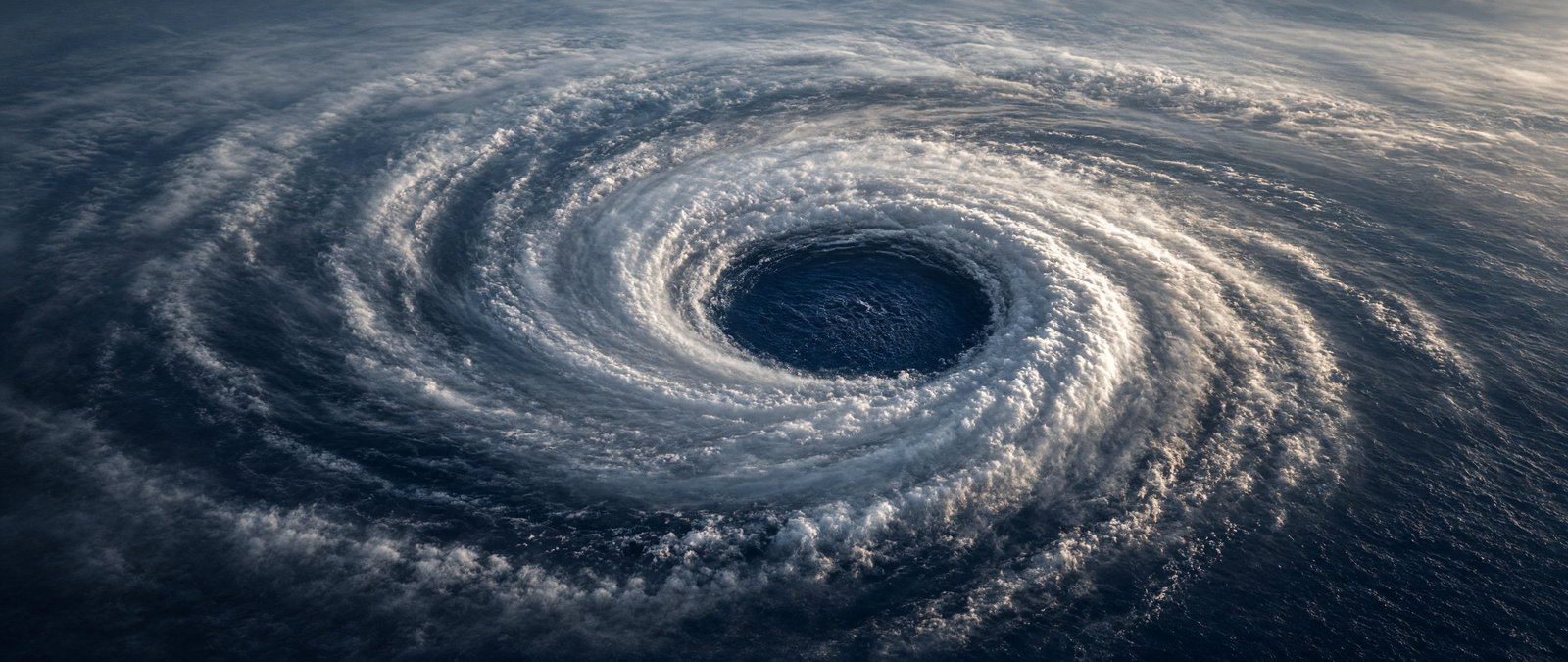
Cyclone Arnab left at least six people dead in eastern India after landfall, king tides and onshore winds flooded streets along Florida’s Atlantic coast, Denver raised water prices after a historic drought, Jamaica marked a year since Hurricane Melissa, and Delhi prepared for storms fed by the cyclone’s remnants.
Cyclone Arnab kills at least six people after landfall in Andhra Pradesh
At least six people were killed after Cyclone Arnab came ashore in Andhra Pradesh early on Wednesday, according to a state government official, while electricity remained cut in parts of India’s eastern coast on Thursday. Some local officials put the toll at nine, with deaths caused by electrocution and by falling trees and collapsing houses. The India Meteorological Department had classed Arnab as a very severe cyclonic storm, the third-highest grade on its scale.
Chief Minister N Chandrababu Naidu said at least 15,000 electricity poles had been damaged and that power had returned to most districts apart from Konaseem and West Godavari. He said technology had helped the government identify the areas most at risk and limit losses. More than 180,000 people were moved from Andhra Pradesh and Odisha before landfall, some schools closed, and trains and flights were cancelled. A cargo ship with 20 crew remained stuck offshore in rough seas.
Arnab grew from a low-pressure area in the Bay of Bengal, a basin that has produced many deadly storms on India’s east coast. It became a depression on 24 October, was named Arnab on 26 October and quickly reached very severe cyclonic storm strength. Andhra Pradesh issued red alerts in seven districts, deployed national disaster response teams and released relief funds, while Odisha prepared more than 1,700 shelters. Before landfall, a man in Visakhapatnam died after touching a fallen live wire and a woman was killed in Puri.
King tides and strong winds keep flooding Florida’s Atlantic coast
Some of the year’s highest tides combined with persistent onshore winds to push seawater into streets along Florida’s Atlantic coast this week. In Flagler Beach, water covered several blocks near South 23rd Street, and residents described the flooding as a recurring problem each autumn. City project manager Todd Anderson said water from the Intracoastal Waterway was spreading through low-lying areas, and two beach walkovers were closed after erosion caused structural damage.
Coastal flood warnings stayed in force through Friday morning in north-east Florida, where forecasters said tides would run 2.0 to 3.0 feet above normal, with high surf and further erosion. Around Orlando’s coast, gusts in the low 30s were expected to keep flooding going at each high tide on Thursday before easing at the weekend. Meteorologists also warned that repeated flooding could hit Miami and Charleston, and they were watching a slow-moving system near the Bahamas.
A king tide is an exceptionally high spring tide that occurs a few times a year, when the Moon is closest to the Earth and the Earth is near its closest point to the Sun, with the Sun and Moon aligned. The term began in Australia and is now widely used in low-lying South Florida, where these tides regularly cause flooding. Their height is predictable, but local winds and ocean conditions can push water levels higher than forecast.
Denver Water raises outdoor watering rates for 2027 after a historic drought
The board of Denver Water, Colorado’s largest water provider, voted unanimously on Wednesday to raise prices for outdoor watering and lower them for indoor use from 1 January, aiming to bring in about 6% more revenue. The utility said monthly bills for single-family homes would rise by an average of about $3.25 to $4.50. Chief executive Alan Salazar said the city was living through a historic drought and asked customers to conserve water.
A snow drought last winter and Denver’s hottest summer on record left the utility’s reservoirs 66% full on Monday, against a typical 89% at this time of year. The board also set extra charges that would apply if drought restrictions remain in place next spring. Denver Water has already imposed its first lawn-watering ban in nearly a quarter of a century, and Salazar said a warming climate meant this would not be the last such drought.
Denver Water was founded in 1918 as a public agency serving the City and County of Denver and part of its suburbs, and it is Colorado’s oldest water utility. It receives no tax money and is funded by water rates and new tap fees. Because the region is arid and its supply depends heavily on mountain snowpack melting in spring and early summer, the utility relies on dams and transfers from the Western Slope to store water for drier periods.
Jamaica marks a year of recovery since Hurricane Melissa
A year after Hurricane Melissa struck Jamaica as the strongest hurricane in the island’s history, health providers there are still rebuilding. The relief organisation Direct Relief said this week that it had delivered requested medicines and medical supplies worth more than $41 million to partners in Jamaica, Haiti and the Dominican Republic, and had given more than $1.3 million in grants to 17 organisations involved in recovery and health care.
In Jamaica, 11 organisations received $856,822 and in Haiti six received $459,530, according to the group. Ten medical facilities in Jamaica now have resilient power systems, with two more under way. Early in the response, a chartered cargo aircraft carried more than 16 tons of aid to Kingston, and a later shipment of 68 tons was sent by air and sea at the request of Jamaica’s Ministry of Health and Wellness.
Melissa made landfall near New Hope, Jamaica, on 28 October 2025 as a Category 5 storm, tying the record for the strongest Atlantic hurricane by sustained winds. It then crossed Cuba and passed near Bermuda. The storm caused 95 deaths, including 45 in Jamaica and 43 in Haiti, and losses in Jamaica were estimated at over $12 billion. Places near the landfall point in Westmoreland and Saint Elizabeth parishes saw almost total destruction, and the name Melissa was retired in March 2026.
Delhi braces for thunderstorms and possible hail as Arnab’s moisture moves north
The India Meteorological Department issued a yellow alert for parts of Delhi and the National Capital Region on Thursday, forecasting light to moderate rain, thunder and lightning, with isolated hailstorms possible. Winds of 30 to 40 kilometres per hour were expected, with gusts of up to 50 during storms. Humid air linked to Cyclone Arnab was forecast to interact with a western disturbance, keeping skies cloudy across the region on Thursday and Friday.
Forecasters expected the system to lower daytime and night-time temperatures, with highs in Delhi of 26 to 28 degrees Celsius on Thursday after 31.8 on Wednesday. The department also forecast heavy to very heavy rain in parts of Bihar, Chhattisgarh, eastern Madhya Pradesh, eastern Uttar Pradesh, Jharkhand and Odisha, and storms with hail in Haryana, Punjab and Chandigarh. The rain could also bring brief relief from the dust and pollution that affect Delhi’s air.
A western disturbance is an extratropical storm that forms over the Mediterranean region and travels east along the subtropical jet stream, bringing sudden rain to north-west India and neighbouring areas. Such systems produce most of the region’s winter and post-monsoon rainfall and are important for crops such as wheat. When their moisture meets other weather systems or the Himalayas, they can bring heavy rain and snow, while excessive falls can damage crops and trigger floods and landslides.