
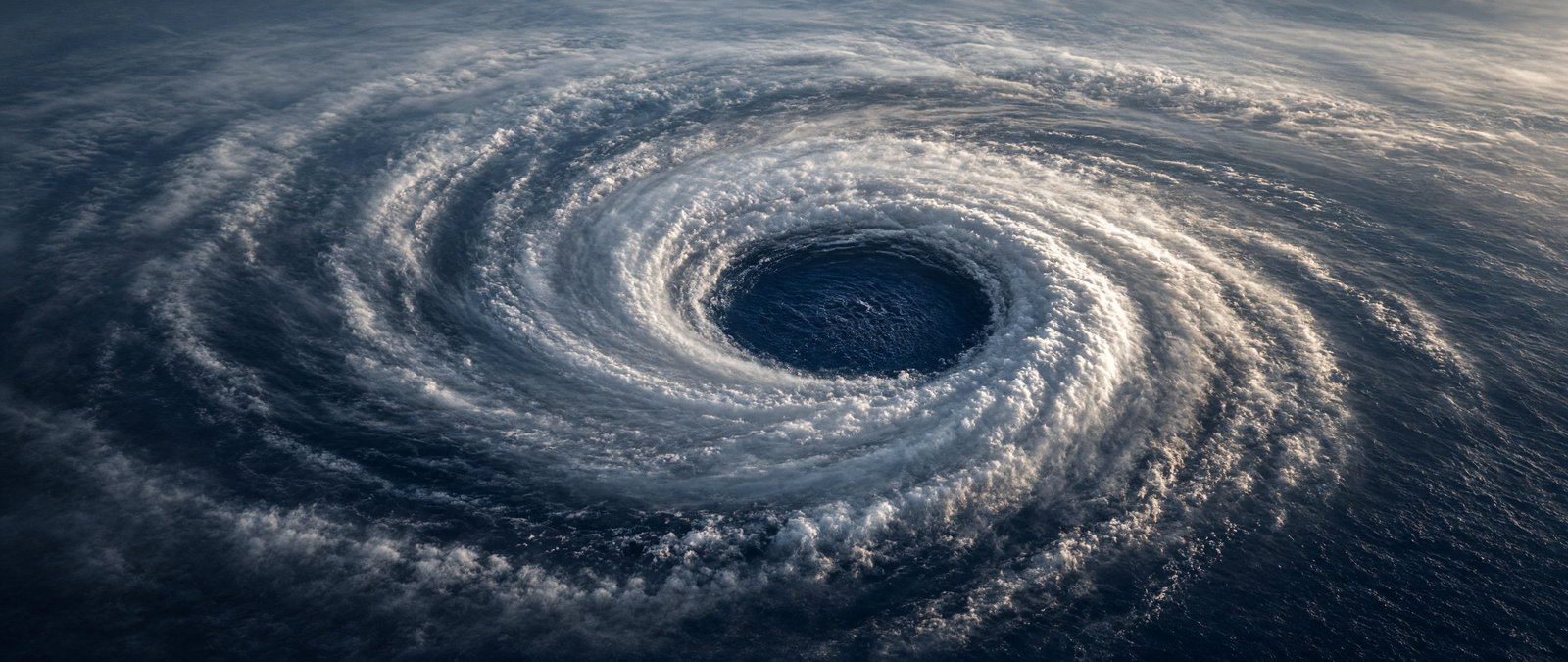
Typhoon Samuel entered the Philippine monitoring area without threatening land, and the first heavy winter rain flooded tents in Gaza. A Maharashtra minister visited drought-hit farmers, floods lifted Lake Powell by more than 20 feet, and a second storm in days killed one person in British Columbia.
Typhoon Samuel enters Philippine monitoring area but stays far from land
Typhoon Cempaka entered the Philippine Area of Responsibility at 8:40 am on Monday and received the local name Samuel, but the state weather agency PAGASA said it was not expected to affect any part of the country. In its 11 am bulletin the agency placed the storm 1,370 kilometres east-northeast of extreme Northern Luzon, moving north-northwest at 20 km/h, with maximum sustained winds of 120 km/h and gusts of up to 150 km/h. No wind signals were raised.
PAGASA said Samuel could keep strengthening and reach its peak on Monday night or early Tuesday, with sustained winds possibly reaching 150 km/h, before starting to weaken. It is expected to turn slowly towards the north-northeast and leave the monitoring area in the same period, then speed up over the Pacific. Separately, the northeast monsoon is bringing strong to gale-force gusts to most of Luzon and the Visayas, rain in the north and waves of up to 5.5 metres off Batanes.
Samuel is the 19th tropical cyclone of 2026 for the Philippines and the first of November. The monitoring area is a zone of the north-western Pacific in which PAGASA tracks weather and gives local names to tropical cyclones, alongside the international names set by the Japan Meteorological Agency. The agency says familiar names help people respond and stress the threat. The country is also under El Niño conditions, which reduce rainfall but do not stop typhoons forming.
First heavy winter rain floods tents of displaced families in Gaza
The first heavy rain of the season flooded tents of displaced Palestinians across the Gaza Strip, soaking bedding and clothes and tearing parts of shelters away in strong winds. The Gaza Municipality said the city received about 60 millimetres of rain from Friday night to Saturday, close to 15% of its yearly average, and blamed the flooding on war damage to drains and roads and a lack of machinery. Residents of camps near Gaza City and Khan Younis described children shivering through the night.
Aid agencies said more than 70,000 tents had been swamped by water and sewage, and the Palestinian foreign ministry said about one million people live in nearly 270,000 tents and shelter sites, many of them worn out. The ministry called for crossings to open fully for fuel, shelter materials and medicines. A UN humanitarian office report had listed 451 displacement sites, home to about 464,000 people, as at high risk of flooding, and Gaza’s civil defence estimates that roughly 300,000 tents are needed.
The UN Development Programme said it had sent 22 heavy vehicles to clear blocked drains and remove waste and had reinforced 94 sites, while UN officials warned that stocks inside the territory fall short of winter needs. The Gaza Strip, bordered by Egypt, Israel and the Mediterranean, covers 365 square kilometres and had just over 2 million people in 2010. The war that began in 2023 caused mass displacement and a humanitarian crisis, and Israel and Egypt have blockaded the territory since 2007.
Eknath Shinde visits drought-hit farmers in Jalna during Diwali
Maharashtra’s Deputy Chief Minister, Eknath Shinde, was due on Monday to visit farming families hit by drought in the village of Moujpuri, in Jalna district, to talk with them and share Diwali snacks and a meal. In a social media post he called farmers the backbone of the state’s economy and said the government had always stood by them in times of crisis. The visit follows his announcement in Mumbai that state ministers would celebrate the festival with struggling farmers.
Shinde said affected farmers were receiving Rs 5,000 as immediate relief, with further drought benefits to come. Chief Minister Devendra Fadnavis said the government had paid Rs 5,000 into the bank accounts of about 1.5 crore farmers to help them celebrate Diwali and that the transfers were still under way. He also said farmers’ electricity bills, including arrears, had been waived, and his office said more rural relief schemes, water conservation work and health measures would follow in the coming period.
Shinde, born in 1964, led a split in the Shiv Sena party in 2022 that brought down the state’s coalition government, and he served as chief minister from 2022 to 2024 before becoming deputy to Fadnavis after the 2024 state election. Jalna district lies in the north of the Marathwada region of central Maharashtra and covers 7,687 square kilometres. The Godavari River runs along its southern boundary, and a reservoir on the Kundlika river supplies water to Jalna city.
Southwest floods lift Lake Powell by more than 20 feet
Storms in late October and early November that flooded communities across the US Southwest have sent much-needed water into reservoirs depleted by years of drought. Lake Powell has risen more than 20 feet from its mid-September low, a larger gain than this year’s snowmelt brought, said Martin Hoerling, a climate scientist at the University of Colorado, Boulder. Even so, the lake holds only a little more than a quarter of its capacity, and as of Friday 15 of 17 launch ramps could not be used.
Hoerling estimated that the floodwater and further rain could add more than 1.2 million acre-feet to the lake, enough for around 4 million average families for a year. Water restrictions on more than 10,000 people around Pagosa Springs in Colorado were lifted after about 7 inches of rain, and Upper Lake Mary, which supplies up to 40% of Flagstaff’s water, has received more than 3 billion gallons since early October, the city’s water production manager, Brian Huntzinger, said.
The region remains in drought, and federal water managers are unlikely to change releases from Lake Powell until snowpack peaks, usually around April, a Utah State University professor said. Under the federal plan for the Colorado River’s Lower Basin, California, Nevada and Arizona will cut use by 1.25 million acre-feet a year over the next two years, a plan Nevada and Arizona are challenging in court. The reservoir, formed by Glen Canyon Dam, holds 24,322,000 acre-feet when full.
Second storm in days kills one and cuts power across British Columbia
The second major storm to hit British Columbia in a few days brought strong winds and heavy rain on the weekend, leaving one person dead and thousands without electricity. Police in Surrey said a driver died on Saturday evening after two vehicles were trapped under a tree that fell across a highway, and the other driver suffered minor injuries. BC Hydro said about 30,000 customers were still without power on Sunday afternoon, after nearly 415,000 lost supply at some point since Friday.
In the village of Zeballos, on north-west Vancouver Island, officials changed an evacuation order issued over landslide risk, which on Sunday covered 30 properties, with an alert on 19 more. Residents described trees falling and power cuts since Saturday. Environment Canada issued a rainfall warning for the Fraser Canyon of up to 50 millimetres and a wind warning for gusts of up to 90km/h in north central parts of the province, and said a further series of storms would arrive from Tuesday to Thursday.
The utility reported its hardest repair work in the Central Interior, east and north of Prince George, where crews faced broken poles and downed lines over a wide area. BC Hydro is a provincial Crown corporation and the main electricity distributor in British Columbia, serving more than 4 million customers. As of 2014, 95 per cent of the province’s electricity came from hydroelectric stations, mostly large dams on the Columbia and Peace rivers, and it operates 32 hydroelectric facilities.