
A school in Abuja has celebrated its 20th anniversary with a day devoted to Nigeria’s regional cultures. A Washington library has opened a show on Black women and Shakespeare, Rwandans in Nairobi have held a cultural gala, a South Korean parliamentary audit has been consumed by disputes and young artists are exhibiting in western Syria.
Abuja school marks 20 years with cultural day celebrating Nigeria’s six regions
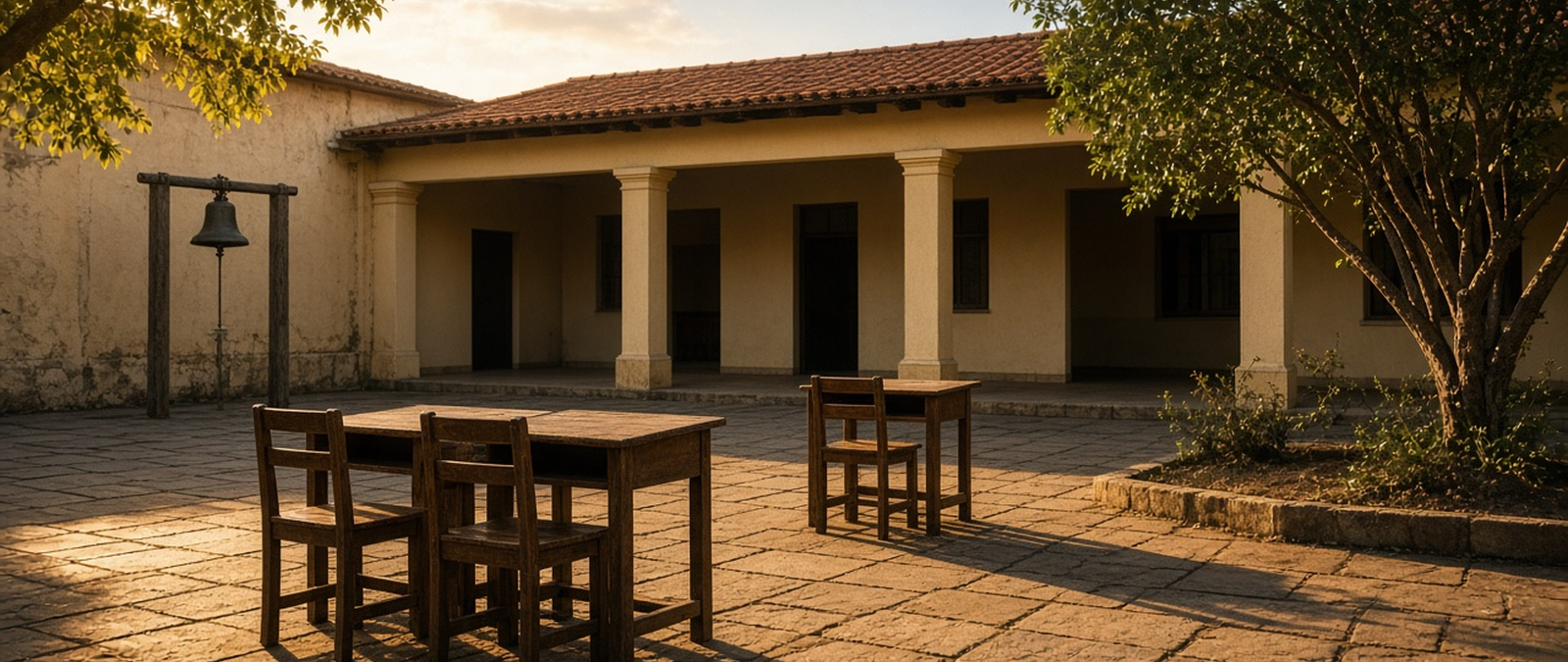
Glisten International Academy, a school in the Nigerian capital, Abuja, celebrated its 20th anniversary on Saturday together with its yearly Cultural Day, pledging to keep investing in education, innovation and the protection of the country’s heritage. The event was held under the theme of empowering innovation, strategic collaboration and sustainable solutions for transformative growth, and it featured displays representing each of Nigeria’s six geopolitical zones as well as international communities. The programme included traditional dishes, regional dress, music and spoken-word performances. The founder and chief executive, Samira Jibir, thanked parents, teachers and former pupils for their part in the school’s development. She said the academy had opened in 2006 with fewer than 50 people and had grown into a community of more than 10,000 students, staff, alumni and parents, with at least 1,000 pupils and more than 300 employees today.
Jibir told the gathering that close cooperation between home and school was essential for good education, encouraged pupils to have confidence in their abilities and described the anniversary as both a milestone and the start of a new chapter. Jibrin Baba-Ndace, director-general of the state broadcaster Voice of Nigeria and a parent at the school, praised its teaching of science, technology, engineering and mathematics, particularly robotics, and its student government, in which pupils campaign for posts such as president and ministers, which he said introduced them to democratic participation and accountability at a young age. The academy’s executive director, Abba Saidu, said the Cultural Day was meant to deepen pupils’ understanding of the food, music and customs of every zone, and called the country’s diversity a national asset to be preserved for future generations. The head of schools, Charles Eneh-Chibuzor, said education also covered identity, values, history, language and creativity.
Nigeria is divided into six geopolitical zones, groupings of states that were created under the military government of General Sani Abacha and that are commonly referred to simply as the zones. They were drawn up less by geography than by bringing together states with similar ethnic groups or a shared political history, in a country of roughly 250 ethnic groups and 525 languages, so that resources could be allocated more effectively. The North Central zone, for example, contains Benue, Kogi, Kwara, Nasarawa, Niger and Plateau states together with the Federal Capital Territory, where Abuja lies. Economic, political and educational resources are often shared out along zonal lines, although the zones have no formal status in the constitution. Several regional organisations and activists have campaigned for them to be recognised constitutionally and given greater autonomy, so that they could manage the resources in their own territories within a federal Nigeria.
Washington exhibition traces four centuries of Black women’s work with Shakespeare
The Folger Shakespeare Library in Washington has opened To Hear Her Speak: Black Women and Shakespeare, an exhibition billed as the first to examine together more than 400 years of Black women’s engagement with the playwright’s work. Curated by Patricia Akhimie, director of the Folger Institute, the show is the result of more than two years of research and brings together nearly 100 objects, including photographs, playbills, books, diaries, illustrations and costumes, alongside video of Black actresses performing Shakespeare across the decades. One room recreates the living room of the playwright Lorraine Hansberry, based on a 1959 magazine photo shoot in her New York flat, where visitors can sit and watch clips of Hansberry and others discussing Shakespeare or browse a small library on the subject. The audio guide is narrated by the actor Adjoa Andoh, who chairs the exhibition, and the show runs until May 2, 2027.
Akhimie said the exhibition covers both theatre history and intellectual history, showing Black women as writers and artists who drew on Shakespeare to create new work. It opens by challenging the idea that the London of Shakespeare’s time was not diverse, drawing on research showing Black women were present in that world. Her team found that records of Black women’s engagement with Shakespeare largely vanish in the 18th and 19th centuries, which she linked to the height of the transatlantic slave trade. To tell that part of the story, the show includes a First Folio bought by a British family that owned slaves, a record of the people forced to work on that family’s sugar plantation, sugar tongs and a tea caddy bearing Shakespeare’s image, and a copybook made by Phillis Wheatley. It also displays Toni Morrison’s handwritten notes for her play Desdemona and takes its title from Sonnet 130.
The exhibition takes its starting point from the poet Maya Angelou, who told a convention in Cedar Rapids, Iowa, in 1985 that William Shakespeare was a Black woman, explaining that she felt his Sonnet 29 had been written for her. The Folger Shakespeare Library, which hosts the show, is an independent research library on Capitol Hill that holds the world’s largest collection of Shakespeare’s printed works and is a leading archive of rare material from early modern Britain and Europe. It was founded by Henry Clay Folger, an oil executive who began collecting in 1889 with the purchase of a 1685 Fourth Folio, and his wife, Emily Jordan Folger. Congress agreed in 1928 to let them build beside the Library of Congress, and the library opened in 1932, two years after Folger’s death. It is privately endowed, administered by the trustees of Amherst College and runs a theatre, an early-music ensemble and programmes for school teachers.
Rwandan community in Kenya holds cultural gala and exhibition in Nairobi
About 500 Rwandans and friends of Rwanda gathered at the Utalii Sports Club in Nairobi on Saturday for the second Rwanda Cultural Gala and Exhibition, an event intended to promote the country’s heritage and to strengthen ties within the Rwandan community living in Kenya. The programme combined sports competitions, cultural performances and an exhibition of goods and services offered by Rwandan entrepreneurs based in the country. Teams spent the day playing football and volleyball and facing each other at igisoro, a traditional board game, and the contests ended with an evening celebration at which the teams that performed best in each category received awards. Traditional dances, songs and drumming filled the evening programme and gave those taking part a chance to present their cultural identity to guests. Business owners used the exhibition to show their products to fellow members of the community and to make new contacts.
Rwanda’s High Commissioner to Kenya, Ernest Rwamucyo, thanked the diaspora committee that organised the gala and urged Rwandans in Kenya to uphold their national values and protect their cultural heritage, encouraging them to stay connected to their roots while promoting the country’s traditions abroad. Innocent Butare, who chairs the leadership committee of the Rwandan Community in Kenya, supported that message and stressed the importance of maintaining a positive image of Rwanda among Kenyans and other residents. The board game played during the day, igisoro, belongs to the mancala family and is a two-player variant of omweso, a game of the Baganda people of Uganda; it is played mainly in Rwanda and Burundi. Players use a board of four rows of eight pits and 64 seeds, with each player’s territory made up of the two rows nearest to them, and moves consist of sowing seeds from pit to pit around that territory.
Rwanda is unusual among African countries in having been a unified state since before the colonial era, populated by the Banyarwanda, who share a single language and cultural heritage. Music and dance play a central role in Rwandan ceremonies, festivals, social gatherings and storytelling. The best-known traditional dance is intore, a tightly choreographed performance in three parts: a ballet performed by women, a dance of heroes performed by men, and drumming. Drums hold particular importance in Rwandan tradition, and royal drummers once enjoyed high status at the court of the king, known as the mwami. Drummers usually perform together in groups of seven or nine. Traditional music has generally been passed on orally, with styles varying between social groups, while a growing popular music industry today blends hip-hop and R&B with influences from elsewhere in East Africa, from Congo and from the United States.
South Korean parliament’s culture audit split by film dispute and Jongmyo high-rise row
The annual audit of the culture sector by South Korea’s National Assembly has been dominated by two disputes, one over the film Assassin(s) and one over plans for tall buildings near Jongmyo Shrine in Seoul, as the Culture, Sports and Tourism Committee works through its final week. The committee is responsible for scrutinising the culture ministry and the national heritage agency. On the first day, October 7, Cho Eun-hee, who leads the opposition People Power Party’s members on the committee, demanded that the chief executive of the film’s production company, its director, its screenwriter and officials of the cinema chain Megabox be called as witnesses, arguing that the film distorted the death of former first lady Yuk Young-soo. Other party members, including Kim Seok-ki and Kim Seung-soo, said parts of the film did not match the facts and that its director should explain his intentions in person.
The governing Democratic Party and the Rebuilding Korea Party opposed calling witnesses, saying creative freedom must be protected and that any grievance could be pursued in civil or criminal courts. Culture Minister Choi Hwi-young told the audit the government does not interfere in the content of creative work and asked whether critics wanted him to carry out prior censorship. The committee chair, Lee Jae-jung of the Democratic Party, said he could not allow creators to be summoned to vet a film. On October 14, People Power Party members walked out after a motion to call the director failed, and film professionals warned the row was becoming a political weapon. Separately, Cho pressed the Korea Heritage Service over its resistance to high-rise permits in the Sewoon District 4 redevelopment zone, saying delays had built up 839.3 billion won in costs. On October 15, the two parties held separate site visits, breaking a tradition of joint inspections.
Jongmyo is a Confucian royal ancestral shrine in Seoul’s Jongno District, built during the Joseon dynasty, which ruled from 1392 to 1897, to hold memorial services for deceased kings and queens. Its main buildings were put up in October 1394, when Taejo, the dynasty’s founder and first king, moved the capital to Hanseong, the city now called Seoul. The shrine was destroyed by fire during the Japanese invasions of the 1590s and rebuilt early in the following century. According to UNESCO, it is the oldest preserved royal Confucian shrine, and its ritual ceremonies continue a tradition established in the 14th century. It was added to the World Heritage list in 1995 and covers about 20 hectares. A road that had separated the shrine from the neighbouring Changdeokgung and Changgyeonggung palaces since 1932 was moved into a tunnel in 2019, restoring the link between the sites.
Exhibition of 150 student paintings opens in Salhab in Syria’s Hama countryside
An exhibition of 150 paintings by young artists has opened at the Arab Cultural Centre in Salhab, in the countryside of Syria’s Hama province, giving students a chance to present their work and develop their skills, according to the Syrian state news agency. Called Bisan: Creativity, Colours That Tell a Dream, the show was organised by the Hama Directorate of Culture and the local cultural centre together with Shams Art Studio. It brings together work by 40 students of different ages who used charcoal, pencil, pastel and oil paint to explore a range of subjects. Faten Abbas, who supervises the studio and the exhibition, said the name Bisan had been chosen to evoke childhood and the idea of a peaceful and secure home. She said the aim was to introduce the public to the students’ work and to build appreciation of the arts, and that she hoped to hold the exhibition regularly.
For the young artists, the exhibition is a chance to gain experience and reach a wider public. Noura Jaroush, who began drawing three years ago, said she had started with pencil and charcoal before moving on to pastels, and that she now hopes to learn to work with coloured pastels and show her pictures to more people. Another student, Milad Youssef, is showing six paintings inspired by nature and everyday life, and said that taking part in exhibitions helps him improve his technique and strengthen his creative skills. Visitors toured the works when the show opened on Saturday, October 17. According to the agency, the show belongs to a broader programme by Syria’s Ministry of Culture that seeks to encourage the arts, back new talent and create occasions for young painters to show what they make and talk about their experience with audiences across the country.
Salhab is a town in the west of central Syria, part of Hama Governorate and located about 48 kilometres north-west of the city of Hama. It sits on the southern edge of the Ghab Plain, on the western bank of the Orontes River, and its neighbours include Nahr al-Bared and al-Suqaylabiyah to the north and Mhardeh and Halfaya to the east. At the 2004 census the town had 15,454 inhabitants, up from about 700 in the early 1960s, and it is the centre of a subdistrict of 18 localities with a combined population of 38,783. A sugar refinery covering 5,200 square metres was built there in 1978 at a cost of $50 million. Close to the town lies Tell Acharneh, a large mound believed to be the site of the ancient city of Tunip, where archaeological excavations have been carried out. The town has traditionally been the seat of the Jnaid clan.