
Brent crude has climbed to 110 dollars a barrel for the first time since May and technology shares have lost more than a trillion dollars in value, the IMF has closed its Bangkok meetings warning that resilience cannot be taken for granted, the US deficit has neared two trillion dollars, Canada’s central bank expects higher inflation, the UK chancellor has backed the growth case for Heathrow, and two large Indian banks and four retail groups have made news.
Brent crude reaches 110 dollars as technology shares lose more than a trillion dollars
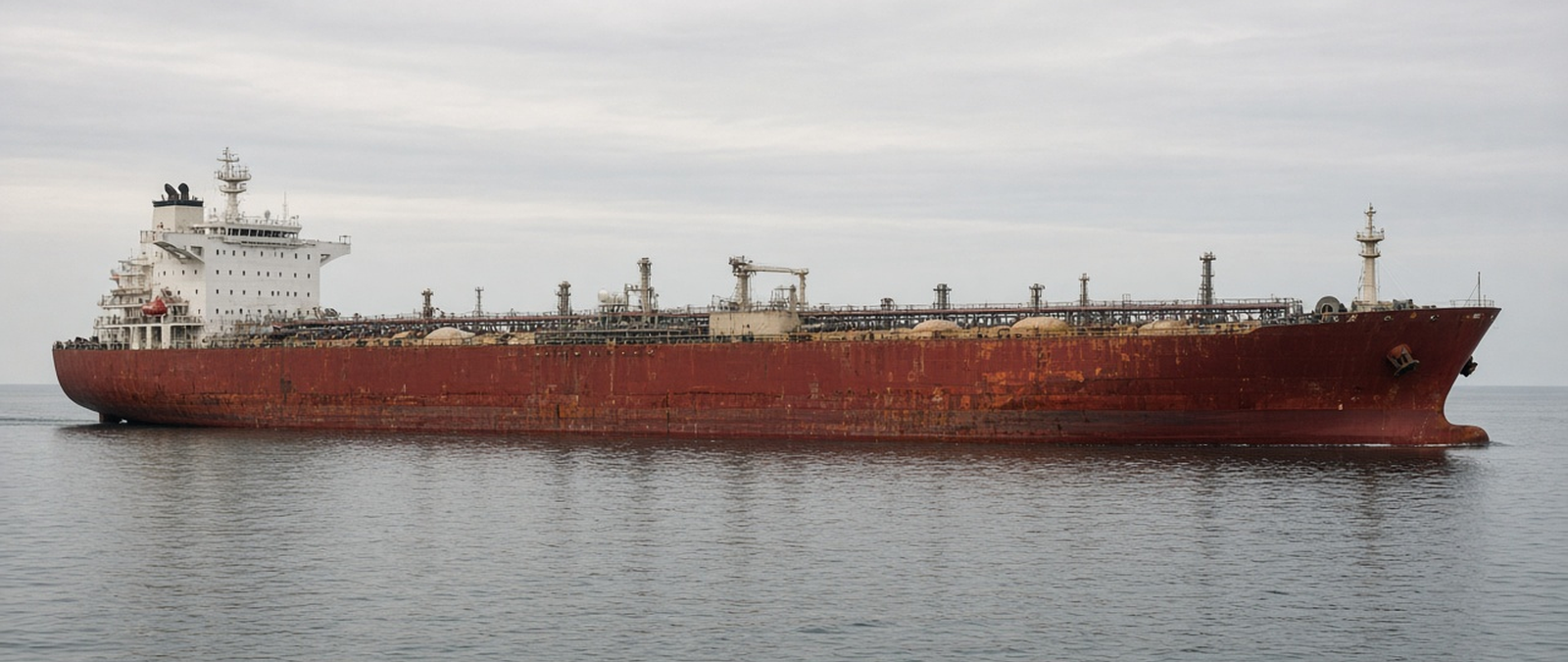
The international benchmark for crude oil rose to 110 dollars a barrel on Friday for the first time since May, as Iran stepped up attacks on shipping in the Strait of Hormuz, the Houthi movement in Yemen fired more missiles at Saudi Arabia and Ukraine said it would keep striking Russian refineries. Brent futures closed at 109.86 dollars, up 3.7 per cent on the day and the highest settlement since 19 May, while the main US grade, West Texas Intermediate, gained 3.5 per cent to 101.41 dollars, its first close above 100 dollars since September. Over the week the US benchmark rose by more than ten per cent and Brent by almost five. Saudi forces said they had intercepted several missiles over the Red Sea, including one aimed at the export terminal at Yanbu, which the kingdom uses to send oil abroad without passing through the strait. Initial assessments found no damage there.
The jump in energy prices fed into a broad sell-off on Wall Street. Technology companies lost more than a trillion dollars in market value on Friday, and the Nasdaq 100 index, which includes most of the largest technology and artificial intelligence groups in the United States, fell 2.5 per cent to stand about seven per cent below the record it set only a week earlier. The S&P 500 index lost one per cent and the smaller companies in the Russell 2000 index fell 1.6 per cent. An index of semiconductor shares dropped 3.8 per cent, its eighth consecutive daily decline and the longest such run since 2008. Traders cited renewed worries about rising government debt, high interest rates and the cost of energy, and analysts said higher fuel prices made another rise in US interest rates this year more likely.
Several forces are pushing prices up at once. At least nine tankers and cargo ships have been attacked near Hormuz since last Sunday, according to the US military and maritime authorities, and US Central Command said Iran sank a container ship on Wednesday, although its crew were evacuated safely. Shipments through the strait fell to about 9.4 million barrels a day in the week to Wednesday, roughly 70 per cent of the pre-war average, according to trade intelligence data. The energy ceasefire that the US president tried to arrange between Russia and Ukraine also unravelled, with Ukraine resuming strikes on Russian refineries; one at Ryazan suspended part of its crude processing after a drone attack. Diesel cost an average of 6.33 dollars a gallon in the United States on Friday, more than 70 per cent higher than a year earlier, according to a motoring association.
Governments are trying to add supply. On Thursday the International Energy Agency approved putting over 20 million barrels of fuel on the market, and the US Department of Energy invited proposals for an exchange of up to 17 million barrels from the national strategic reserve, in addition to an earlier loan of 172 million barrels under a coordinated release of 400 million barrels by about 30 countries. At the start of October the picture had looked calmer. Crude exports from the Gulf had largely returned to pre-war levels in September, with at least 16.5 million barrels a day leaving the region, thanks to pipelines through Saudi Arabia and the Emirates, ship-to-ship transfers off Oman and naval escorts. About 40 per cent of the region’s crude was then avoiding the strait altogether, compared with 17 per cent before the war began.
Even then, analysts warned that refined fuels were the weak point. Shipments of products such as diesel through Hormuz were running at less than a fifth of their pre-war level, and diesel prices in the United Kingdom reached a record of just over 199 pence a litre at the end of September. Russia has traditionally been one of the largest exporters of diesel, but Ukrainian attacks have taken much of its refining capacity out of service, while refineries in the United States and Europe are already running close to full capacity. The rise in prices began after the United States and Israel attacked Iran at the end of February, prompting Tehran to close the strait. Rising fuel costs have become a central issue before the US midterm elections on 3 November, and the administration’s efforts to bring prices down, including a deal to buy Russian diesel, have so far had little visible effect.
IMF meetings in Bangkok end with warnings over debt, inflation and artificial intelligence
The annual meetings of the International Monetary Fund and the World Bank ended in Bangkok on Saturday with the Fund’s managing director, Kristalina Georgieva, describing a mood of both optimism and worry about the world economy. Speaking at a press conference with the Saudi finance minister, Mohammed al-Jadaan, who chairs the Fund’s steering committee, she said policymakers had been encouraged by the resilience of global growth, the promise of artificial intelligence and the dynamism of Asia, but concerned about inflation, high debt, wars, climate risks and the technology itself. Finance ministers and central bank governors from around the world spent the week discussing surging prices, rising bond yields and the boom in investment linked to artificial intelligence. Ms Georgieva said reliance on a single source of growth was like standing on one leg.
Ms Georgieva said the Fund had a responsibility to help low-income countries hit by the rise in energy prices since the war on Iran began, and described inflation as a tax on the poor. The IMF considers poorer oil-importing nations the most exposed, because they do not benefit from the investment boom that has supported growth in many advanced economies. She said debt repayments in low-income countries had risen from eight to 14 per cent of government revenue in recent years, and that the Fund would help with debt restructuring, raising domestic revenue, attracting international finance and encouraging private investment. Mr al-Jadaan said in a closing statement that the world economy had absorbed the latest shocks better than expected, but that buffers had been worn down and resilience could not be taken for granted.
The meetings were also marked by a diplomatic protest. Nearly half of the delegates walked out of a session of the steering committee when the Russian finance minister, Anton Siluanov, began to address it, according to the president of Germany’s central bank, Joachim Nagel. The governor of the Bank of England, Andrew Bailey, took part alongside counterparts from France, Germany and several Scandinavian and Baltic countries, and the British central bank confirmed his participation. One European diplomat said the war in Ukraine was existential for Europe and that relations with Russia could not be normalised. Germany had warned beforehand against attempts to bring Russia back onto the international stage. Mr al-Jadaan acknowledged the walkout but said the chair’s statement showed that all members had agreed to it, which he said was what mattered.
The Fund set the tone for the week on Tuesday, when it published its twice-yearly World Economic Outlook in the Thai capital. It said the global economy had withstood the Middle East conflict better than feared, helped by the rerouting of oil away from the Strait of Hormuz and record releases of emergency stocks, but warned that those stocks were now depleted and that high debt left many governments with little room to shield consumers from further price shocks. Without rebuilding supply and policy buffers, it said, the world economy could soon test the limits of its resilience. The Fund’s economic counsellor, Silvana Tenreyro, urged governments to move from coping to rebuilding. Ahead of the meetings, Ms Georgieva had also called on governments to tighten their budgets as global debt climbed.
In the same report the IMF raised its forecast for world growth this year slightly, to 3.1 per cent from 3 per cent in July, and kept its forecast for next year at 3.4 per cent. It left its estimate for US growth this year at 2.3 per cent and raised its 2027 forecast to the same figure, while lifting its forecast for the United Kingdom this year to 1.3 per cent. It warned, however, that prolonged high oil prices and rising long-term interest rates were likely to slow growth in 2027 by weighing on spending and investment. The Fund has repeatedly said this week that heavy borrowing and climbing bond yields in rich economies are making credit tighter just as central banks may need to raise interest rates to bring inflation down.
United States records a budget deficit of almost two trillion dollars
The United States ended the 2026 fiscal year with a budget deficit of 1.992 trillion dollars, about 12 per cent more than the 1.775 trillion dollars recorded the year before, the Treasury Department reported on Friday. It is the third-largest annual deficit in the country’s history, exceeded only in 2020 and 2021, when the federal government spent heavily on relief during the Covid-19 pandemic. A Treasury official said both receipts and spending reached record levels during the year. The figures mean the government has now run a deficit for 25 consecutive fiscal years; the last surplus was in 2001. In September alone the deficit was 27 billion dollars, compared with a surplus of 198 billion dollars in the same month a year earlier, the department said.
Social Security remained the largest single item of federal spending, at almost 1.7 trillion dollars, up from about 1.6 trillion dollars in 2025. Medicare, the public health programme for older Americans, cost nearly 1.1 trillion dollars, compared with just under a trillion the previous year. Net interest, which measures the interest the Treasury pays minus what it receives, also exceeded a trillion dollars, up from 970 billion dollars in 2025, and gross interest on the public debt topped 1.3 trillion dollars. On the revenue side, individual income taxes brought in more than 2.8 trillion dollars, about seven per cent more than a year earlier, while corporate income tax receipts fell by about 70 billion dollars to 381 billion dollars because of tax cuts approved by Congress last year.
Customs duties reached a record gross level during the year, a Treasury official said, reflecting the administration’s broad tariffs on imports, which the president has presented as a way to raise revenue and reduce the debt. However, total customs revenue was reduced by refunds that the government was required to pay after the Supreme Court ruled earlier this year that many of the tariffs were unconstitutional, sending billions of dollars back to importers. The Treasury Secretary, Scott Bessent, has argued that the United States can grow its way out of its rising debt, and he said in August that global growth was the way to deal with what he called a mountain of debt. Total federal debt passed 40 trillion dollars earlier this year and has more than doubled in a decade.
The scale of borrowing has become a growing concern in financial markets. Yields on ten-year and 30-year US government bonds reached their highest levels in 24 years last week, and the ten-year yield has climbed by more than a percentage point since the end of February to about 5.1 per cent. Analysts say several forces are behind the rise: the war with Iran, which has driven up oil and diesel prices and raised expectations that the Federal Reserve will keep lifting interest rates; investors’ demand for extra compensation to hold long-term debt as the government keeps issuing it; and competition for capital from companies borrowing hundreds of billions of dollars to build infrastructure for artificial intelligence. Because the markets for company and government debt are closely connected, global investors looking for safe long-term assets now have appealing options outside US government bonds.
Higher borrowing costs are already being felt in the wider economy. The average 30-year fixed mortgage rate in the United States is hovering around 7.5 per cent, and pending home sales fell four per cent in September, the largest monthly drop in three years, according to a property brokerage. Economists say a credible commitment to cut the deficit would probably ease long-term yields, but the size of any such effect is uncertain and would depend on how deep the cuts were. With polls pointing to a divided Congress after the midterm elections on 3 November, analysts expect little chance of the two parties agreeing on major measures to reduce the deficit for at least the next two years. That leaves any lasting fix years away, even as higher rates start to bite and threaten to deepen the government’s own debt problem.
Bank of Canada governor expects to raise the inflation forecast as oil stays high
The governor of the Bank of Canada, Tiff Macklem, said on Saturday that he expected the central bank to revise its inflation forecast upwards at its next interest rate announcement, with no end in sight to the Middle East conflict and oil prices remain well above earlier assumptions. Speaking to reporters in Bangkok at the end of the IMF meetings, he noted that when the bank published its last quarterly projections in July, it expected Brent crude to average about 75 dollars a barrel in the third quarter, compared with around 110 dollars now. If oil stays near 100 dollars, he said, inflation in Canada would probably drift up gradually from its current level of three per cent. The bank’s next decision is due on 28 October, and data on September inflation and the bank’s own business and consumer surveys will be published on Monday.
Mr Macklem said the bank could not change inflation over the coming months and had to look six months to a year ahead. The question for policymakers, he said, was whether inflation would return to the two per cent target by itself, or whether the bank would need to raise interest rates to nudge it back. He pointed to the escalation of the conflict since the Houthi movement in Yemen began firing missiles at Saudi Arabia, and warned that the strategic oil reserves that had helped to contain the shock were being run down. China had reduced its purchases by drawing on its large stockpiles, he said, but would eventually have to return to the market. As of Friday, financial markets saw about a 35 per cent chance of a quarter-point rise in October and a 95 per cent chance by the following decision on 9 December.
The governor said the main lesson of the Bangkok meetings was that the global economy had proved resilient in the face of several shocks, but that this should not be taken for granted. Energy prices remain volatile, he said, rising interest rates are putting pressure on countries with weak public finances, and it is still unclear whether the boom in artificial intelligence can be sustained, with possible consequences for growth and for bond and share markets. He said risks that policymakers had been discussing for some time, such as high sovereign debt and the fragility of the artificial intelligence boom, were becoming more intertwined. So far, higher energy costs have had a relatively limited effect on other consumer prices in Canada. He also noted that releasing emergency oil reserves had helped to contain the shock, but that this could only be done a limited number of times.
The Bank of Canada has kept its benchmark rate at 2.25 per cent for seven consecutive decisions, balancing the risk of higher inflation against the damage to growth from the trade war with the United States. At its September announcement, however, the governor said inflation risks driven by oil had become the bank’s main concern. Other central banks, including the US Federal Reserve and the European Central Bank, have already begun raising rates in response to the energy shock. In mid-September the Federal Reserve delivered its first increase in more than three years, and markets in Canada began treating the October meeting as roughly an even bet, a shift economists attributed mainly to persistently high global energy prices linked to the war in Iran.
Records of the bank’s deliberations before its 2 September decision showed that its governing council was already worried at the end of August that oil prices were staying high for longer than expected. Council members agreed that the longer fuel prices remained elevated, the greater the risk that they would push up other prices, although there were few signs at that stage of the effect spreading beyond petrol and air fares. They also noted that rising bond yields around the world, driven largely by concerns about US government debt, were spilling over into Canadian government bonds. When markets expect higher interest rates, bond yields rise, and lenders who price fixed-rate mortgages from those yields pass the cost on to households even before the central bank acts.
UK chancellor makes growth case for a third Heathrow runway as prime minister stays neutral
The UK chancellor, John Healey, has said the argument for a third runway at Heathrow has always been an argument for growth, setting out a markedly warmer position than the prime minister, Andy Burnham, who has declined to say whether he supports the project. Speaking to reporters at the IMF meetings in Bangkok, Mr Healey said airports at Heathrow and across the country had been a significant source of jobs and growth in recent decades. He said the formal position was that the public consultation, led by the Department for Transport, had closed and that its responses were being reviewed, with further decisions and announcements to follow. Mr Healey, who voted for a third runway when the House of Commons considered the question in 2018, has said that growth is the number one mission for both himself and the prime minister.
The airport is pressing for a decision. Its chief executive, Thomas Woldbye, warned this week that shareholders could reconsider their support for the project, estimated to cost 33 billion pounds, if it did not receive the prime minister’s backing, saying they had accepted delays so far but could not wait for ever. The consortium of owners, which includes the Qatar Investment Authority, the French private equity firm Ardian, Saudi Arabia’s Public Investment Fund and Singapore’s sovereign wealth fund, has said it needs explicit support from Mr Burnham before the end of the year to proceed, and must choose over the next few months whether to submit a formal planning application. Mr Woldbye has also said that failing to build the runway would be a huge missed opportunity and that the project was not only for Londoners.
Mr Healey’s predecessor as chancellor, Rachel Reeves, made the expansion a centrepiece of her case that Britain was open for business, placing approval of the runway at the heart of a speech on growth last year. Since taking office in July, Mr Burnham has described the matter as one for London and Londoners and said he wanted to hear the views of local people before reaching a decision. A report suggested the prime minister had told Heidi Alexander, the transport secretary, that the case for the scheme had not convinced him. The Department for Transport has said it is considering the next steps following the consultation on a national policy statement that will underpin any decision on granting a new runway. Heathrow has responded that it agrees local voices must be heard, and says polling over the past decade shows that communities back its expansion plans.
When he was mayor of Greater Manchester, Mr Burnham opposed the expansion, arguing that it would delay investment in transport for the north of England. At the end of September, after Heathrow indicated that the runway might not open until 2039 rather than 2035 because of planning and regulatory obstacles, he described himself as open-minded and said different views had to be taken seriously. The project has long faced opposition from residents, environmental campaigners and the mayor of London, Sadiq Khan. Supporters, including the trade unions Unite and the GMB, say it would create around 100,000 jobs and provide a substantial boost to the economy, and Unite has argued that it would also guarantee a market for British steel. Heathrow admitted in September that the original timetable would be hard to meet without further steps to simplify planning, and the Department for Transport said the schedule had always been ambitious.
Heathrow, the busiest airport in the United Kingdom, handles more than 80 million passengers a year through four terminals and two runways. Flights are currently capped at 480,000 a year, and a third runway would lift the limit to 720,000, close to 2,000 flights on an average day. The plan would involve demolishing hundreds of homes, diverting rivers and moving a section of the M25 motorway into a tunnel between junctions 14 and 15. Heathrow has said it hopes to obtain planning permission by 2029 and to open the runway within a decade. Mr Healey has returned to London to finish preparing his budget, due on 28 October, after the IMF praised the United Kingdom this week for acting to reduce its deficit and urged the chancellor to stay the course.
HDFC Bank deputy managing director Kaizad Bharucha to leave at the end of the year
Kaizad Bharucha, the deputy managing director of HDFC Bank, India’s largest private sector lender, has asked to leave the bank at the close of business on 31 December, the bank said in a stock exchange filing on Saturday. Its nomination and remuneration committee and its board accepted the request at meetings on 16 and 17 October and will forward it to the Reserve Bank of India for approval. Mr Bharucha, who joined the bank in 1995, is one of its longest-serving executives and was one of two candidates whose names the bank put forward to the regulator for the post of chief executive. The announcement came ten days before Anup Bagchi, a veteran of the rival ICICI group, takes over as managing director and chief executive on 27 October for a three-year term approved by the central bank.
Mr Bharucha’s candidacy faced a regulatory obstacle. Rules set by the Reserve Bank cap the continuous tenure of a bank’s managing director, chief executive or whole-time director at 15 years, and Mr Bharucha has been a whole-time director since June 2014, which means he would have reached the limit in June 2029. Had he been appointed to succeed Sashidhar Jagdishan, whose term ends on 26 October, he would have been unable to complete a full three-year term without an exemption. People familiar with the process had said the regulator preferred a candidate with a longer runway, which strengthened the case for an outside appointment. Mr Bagchi, who spent about three decades at ICICI and previously ran its life insurance arm, was selected instead. The regulator approved his appointment only a few weeks ago.
The filing came as the bank reported higher profits for the July to September quarter. Consolidated net profit rose 5.55 per cent from a year earlier to 20,700 crore rupees, while standalone net profit grew 4.7 per cent to 19,510 crore rupees. Total income increased to 97,258 crore rupees from 91,040 crore rupees, and expenditure rose to 67,774 crore rupees. Profit after tax excluding treasury gains grew 12.6 per cent, the bank said. Asset quality improved, with gross non-performing assets falling to 1.11 per cent of loans at the end of September from 1.17 per cent three months earlier and 1.24 per cent a year before. The overall capital adequacy ratio stood at 18.9 per cent, down from 20 per cent a year earlier.
At the end of August, Mr Bharucha was widely seen as the leading internal candidate to succeed Mr Jagdishan, who decided not to seek a third term. Aged 61 at the time, he joined the bank in October 1995, became a board member in 2014 and was promoted to deputy managing director in April 2023, overseeing a large part of the lending business, including retail loans, rural banking, small businesses and several wholesale banking units. People close to the board said then that it was inclined to choose him for the sake of continuity. He had also been considered for the top job in 2020 but was passed over in favour of Mr Jagdishan, reportedly because of the preference of the then chief executive, Aditya Puri.
Mr Puri led the bank for 26 years and had opposed the 40-billion-dollar reverse merger with the mortgage lender HDFC, which took effect in July 2023 and transformed the size of the group. The Reserve Bank requires lenders to submit several names for the post of chief executive, including at least one external candidate, and normally carries out at least three months of due diligence on the candidates. Mr Bharucha’s departure will be another significant change at the top of the bank as it moves to new leadership. In August, the outside names mentioned as possible contenders included K Balasubramanian, who runs Citi’s business in India and once led corporate banking at HDFC Bank, and Hitendra Dave, the chief executive of HSBC India. The same insider argued then that Mr Bharucha offered continuity, deep knowledge of the institution and decades of experience inside it.
ICICI Bank reports a 20 per cent rise in quarterly profit as lending grows strongly
ICICI Bank, one of India’s largest private lenders, reported a 20.1 per cent rise in standalone net profit to 14,843 crore rupees for the quarter to 30 September, beating market expectations thanks to lower provisions and higher fee income. Net interest income, the difference between what the bank earns on loans and pays on deposits, grew 17.7 per cent to 25,339 crore rupees. The net interest margin narrowed to 4.18 per cent, from 4.36 per cent in the previous quarter and 4.30 per cent a year earlier. Operating expenses rose 8.5 per cent to 12,811 crore rupees, while provisions fell to 851 crore rupees from 914 crore rupees a year before. Consolidated profit after tax, which includes the bank’s subsidiaries, increased 22.3 per cent to 16,333 crore rupees, and consolidated assets grew 22.6 per cent.
Lending expanded rapidly. Total advances rose 30 per cent from a year earlier and 12.3 per cent from the previous quarter, to 18,31,580 crore rupees, although the figure was boosted by loans made through international branches against foreign currency deposits from non-resident Indians; excluding those, loans grew 24.1 per cent. Retail and rural loans grew 14.8 per cent and made up 51.6 per cent of the portfolio, business banking loans rose 33.8 per cent and corporate lending 30.6 per cent. Total deposits climbed 27.1 per cent to 20,49,874 crore rupees, or 17 per cent excluding the foreign currency deposits. The average share of current and savings accounts fell to 35.8 per cent, which the bank attributed to the inflow of term deposits from abroad.
Asset quality remained stable. New gross non-performing loans in the quarter amounted to 4,833 crore rupees, compared with 5,034 crore rupees a year earlier, while recoveries and upgrades came to 3,620 crore rupees, leaving net additions of 1,213 crore rupees before write-offs and sales. The bank wrote off 1,592 crore rupees of bad loans during the quarter, and its provision coverage ratio on non-performing loans stood at 75 per cent. Beyond its specific provisions, it held 23,815 crore rupees in other provisions, or 1.3 per cent of loans, including contingency provisions of 13,100 crore rupees. Its total capital adequacy ratio was 16.68 per cent and its core equity ratio 16.01 per cent, well above the regulatory minimums of 11.70 per cent and 8.20 per cent.
During the quarter the bank also bought an additional two per cent stake in its life insurance subsidiary for 1,470 crore rupees. The results follow a strong first quarter. In July, ICICI reported that profit after tax had risen 15.9 per cent from a year earlier for the April to June period, with profit before tax excluding treasury gains up 20.9 per cent and core operating profit up 15.6 per cent. Its chief executive, Sandeep Bakhshi, said at the time that the bank’s strategy remained focused on growing core profit through what he called a customer-centred approach across its markets, while keeping a strong balance sheet, prudent provisioning and healthy capital levels. He added that he saw plenty of room to expand profitably while keeping risks in check, and to win market share in important segments.
At the end of June, the bank’s loan book was growing at 19.6 per cent a year, with rural lending including gold loans expanding by more than 35 per cent and business banking by 28 per cent, while its credit card portfolio was shrinking slightly. Its chief financial officer, Anindya Banerjee, said then that part of the growth in corporate lending reflected companies moving away from raising money in the bond market, and that the bank’s programme to attract foreign currency deposits from non-resident Indians was at an early stage. The sharp increase in those deposits during the latest quarter explains much of the difference between the headline growth figures and the underlying pace of lending and deposit gathering at the bank. At the end of June total deposits had been growing at 14 per cent a year, and the bank’s core equity ratio stood at 16.19 per cent.
Police in India’s Maharashtra state file case against retail and delivery groups over expired food
Police in the Indian state of Maharashtra have registered a criminal case against officials of Reliance Consumer Products, Reliance Retail, the quick delivery company Blinkit and Zomato’s supply business Hyperpure, after the state’s Food and Drug Administration seized food worth about 48 lakh rupees in a crackdown on the sale of expired products, an official said on Saturday. The first information report, filed at the Shanti Nagar police station in Thane, names ten people, including a whole-time director of Reliance Consumer Products, a director of Blinkit Commerce, warehouse managers and employees, as well as operators of a waste disposal agency and local suppliers. It was registered under the Food Safety and Standards Act of 2006 and India’s new criminal code. Those named also include a nominee and a warehouse manager of Reliance Retail, an employee of Blinkit Commerce and an employee of Zomato Hyperpure.
The regulator’s preliminary investigation suggested that expired, damaged and customer-rejected goods that should have been destroyed were allegedly routed via disposal firms, sorting yards without licences and brokers before being sold to consumers again. The disposal agencies are alleged to have issued certificates stating that the products had been destroyed without proper checks, and inspectors found discrepancies in disposal records, including mismatched quantities and inconsistent details of senders and recipients. The stock was allegedly sorted at unlicensed yards in Bhiwandi, where packets that still looked saleable were separated and passed to brokers and suppliers. Expired and leaking products were later found on sale at a shop in the town that had no licence and no purchase records. Officials say these products then reached retailers, who sold them to the public.
Seven teams of assistant commissioners and food safety officers carried out coordinated inspections in the districts of Thane and Pune on 14 and 15 October. More than 24 lakh rupees of the seized goods came from a disposal yard in Bhiwandi, about 4.92 lakh rupees from a Reliance Consumer Products warehouse at Vadpe and nearly 7.81 lakh rupees from a Hyperpure facility at Usatane, with the total put at just over 48 lakh rupees. Officials made an inventory of the stock, took samples, recorded statements and ordered that the seized products must not be moved, sold or destroyed. After hearings on 15 October, the licences of five businesses were suspended and four unlicensed premises were ordered to stop trading. Food safety officials said the operation was carried out at several sites in the two districts at the same time.
The case is the latest in a series of enforcement actions by the Maharashtra Food and Drug Administration under its commissioner, Tukaram Mundhe. At the end of September the regulator issued a statewide order imposing stricter rules on how infant foods and milk substitutes are made, sold, labelled and promoted. That order applied across the supply chain, from manufacturers and importers to retailers, pharmacies and online platforms, and banned the promotion of infant formula, including through social media influencers. Inspectors said they had found packaging without mandatory notices about the benefits of breastfeeding and products marketed under vague labels to avoid the standards that apply to infant food. The regulator has also reported resolving 72 per cent of 13,857 complaints within three months, using artificial intelligence to weed out more than 11,000 invalid submissions.
The case touches some of the best-known names in Indian retail and online delivery. Reliance Retail and Reliance Consumer Products belong to the Reliance group, while Hyperpure is the supply arm of the Zomato food delivery business and Blinkit offers deliveries of groceries and household goods within minutes. Beyond the company officials, the report names the operator of a disposal firm called B K Dispose, a supplier and a discount store in Bhiwandi. The allegations centre on what happened to unwanted stock after it left company warehouses, and on whether destruction certificates issued by the disposal agencies were genuine. The police case is at an early stage, no court has ruled on the allegations, and the regulator’s investigation in the districts of Thane and Pune is still continuing.