
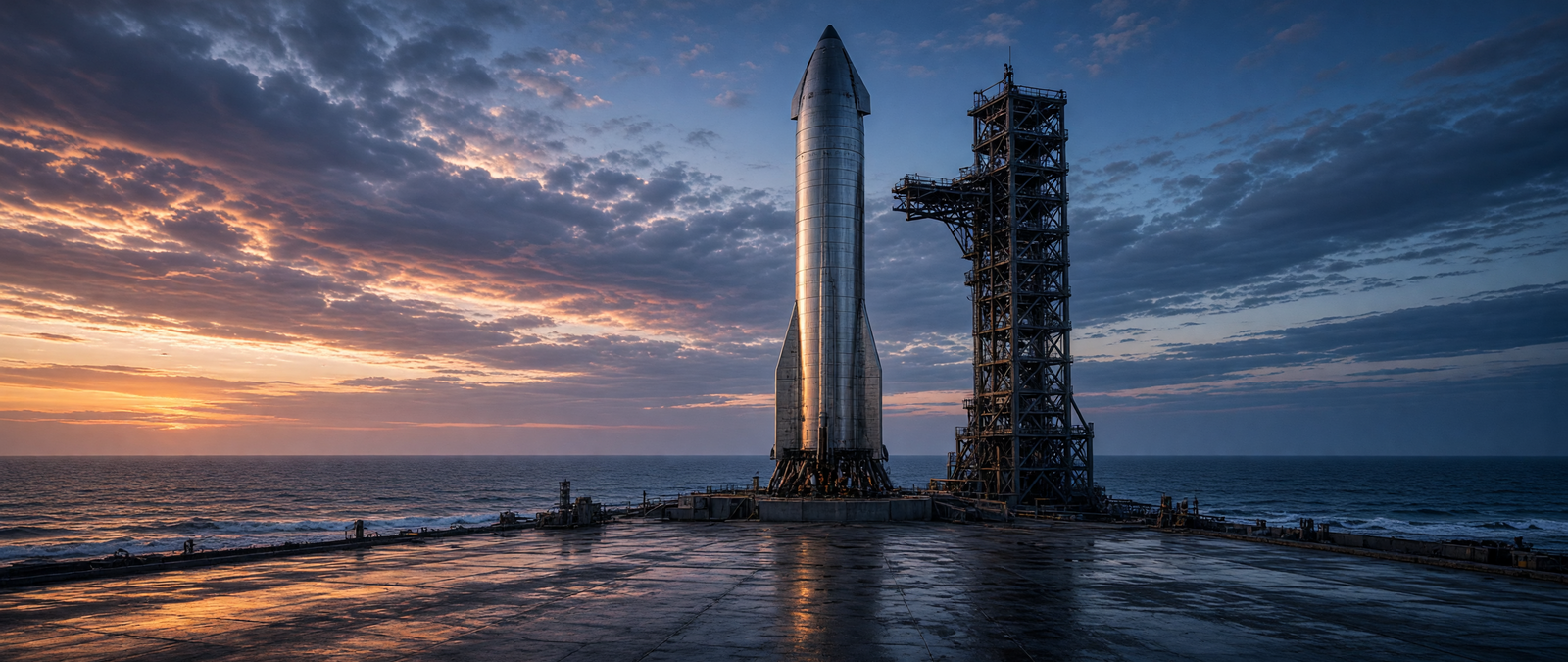
Elon Musk has promised a SpaceX share to every American child, while India’s Axis Bank lost ground after a profit miss. Abu Dhabi has secured the 2029 IMF and World Bank meetings, Bitcoin has recovered slightly as oil fell, and China has reported third-quarter growth that keeps its yearly goal within reach.
Musk pledges to give one SpaceX share to every child in America next year
Elon Musk, the founder and chief executive of SpaceX, said on Monday that he would give one of his own SpaceX shares to every child in the United States next year, describing it as the first of many such gifts. He made the pledge in a post on his social network, X, without saying which age range would qualify. SpaceX stock, which trades under the ticker SPCX, rose about 1% in early trading before the market opened on Monday.
The scale of the promise depends on who counts as a child. The Census Bureau estimates that about 73 million people under 18 live in the country, a figure that falls to roughly 18.5 million for children aged four or younger. The shares closed at $146.03 on Friday, October 16. SpaceX’s chief operating officer, Gwynne Shotwell, has already pledged a personal donation of more than $320 million in company stock to fund Trump Accounts for over two million children.
SpaceX was founded in El Segundo, California, on March 14, 2002, and for years rejected a stock market listing before Musk confirmed in December 2025 that it would go public. It filed for its offering in May 2026, priced the shares at $135 on June 11, valuing the company at about $1.77 trillion, and began trading on the Nasdaq on June 12. The listing was the largest on record and made Musk the first person worth more than a trillion dollars.
Axis Bank shares fall as quarterly profit misses forecasts despite strong growth
Shares of Axis Bank fell more than 4% to 1,232 rupees on the Bombay Stock Exchange on Monday after the Indian lender’s quarterly profit came in below analysts’ expectations. The bank said on Saturday that standalone net profit for the second quarter of the 2027 financial year rose 38% from a year earlier to 7,003 crore rupees, up from 5,089 crore. Analysts polled by the data group LSEG had expected about 7,124 crore on average.
Net interest income grew 12% to 15,371 crore rupees and the net interest margin stood at 3.36%, down ten basis points from the previous quarter. Loans grew 23% from a year earlier, and asset quality improved, with the gross bad loan ratio falling to 1.16% and the net ratio to 0.35%. Chief executive Amitabh Chaudhry pointed to digital payments and new technology partnerships. Brokerages split, with Jefferies keeping a target of 1,700 rupees while Centrum and Dolat Capital cut theirs.
Axis Bank was founded on December 3, 1993, as UTI Bank, part of the state-owned Unit Trust of India, and was promoted by several public insurers, including the Life Insurance Corporation, which remains its largest shareholder. It took its current name in July 2007 after opening branches in Singapore, Dubai and Hong Kong. Based in Mumbai, it is India’s third largest private bank by assets and fourth largest by market value, with more than 6,000 locations and about 101,000 employees in March 2026.
Abu Dhabi will host the IMF and World Bank annual meetings in 2029
The United Arab Emirates has signed an agreement to bring the 2029 Annual Meetings of the World Bank Group and the International Monetary Fund to Abu Dhabi, its capital. Finance ministers, central bank governors and delegates from 191 countries are expected to attend. The deal was signed as this year’s meetings closed in Bangkok, by Minister of State for Financial Affairs Mohamed bin Hadi Al Hussaini and central bank governor Khaled Mohamed Balama, with World Bank President Ajay Banga and IMF chief Kristalina Georgieva.
Al Hussaini said the choice reflected international confidence in the country’s infrastructure and financial system, and Balama said the central bank would bring its work on financial stability and digital services to the talks. Banga said the World Bank would focus on jobs, growth and financing at scale, while Georgieva called the Emirates an important centre for finance and cooperation. The Bangkok meetings, held from October 12 to 18, saw the IMF urge governments to tighten fiscal policy and end broad cash handouts.
The two institutions meet every autumn for the annual meetings and every spring for a second gathering, alternating which of them takes top billing. By custom the autumn event is held in Washington for two years running and in another member country every third year. Ministers and central bank governors sit on the committees that steer both bodies, and the governors also meet in plenary sessions. The Emirates last hosted the event in Dubai in September 2003, when outdoor protests were banned.
Bitcoin edges up after two weeks of losses as oil prices fall
Bitcoin rose about 0.8% to $82,848 on Monday morning, recovering a little after slipping roughly 2% over the previous two weeks. The largest cryptocurrency has moved between $80,000 and $87,000 over the past month as rising Treasury yields and a sell-off in technology stocks weighed on demand and pushed money out of digital assets. Other tokens also gained but stayed within their recent ranges, with Ether up 0.5% at $2,437.60 and Solana up 1.6%.
The modest lift followed a sharp fall in oil prices after Donald Trump signed an order waiving sanctions on Russian oil, a decision opposed by European leaders, Ukraine and some American lawmakers. Lower oil eased fears of persistent inflation and of further rate rises by central banks, which would raise the cost of holding assets that pay no yield. Traders still expect at least one more increase by the Federal Reserve this year as inflation in the United States stays high.
Bitcoin was created in 2008, when a white paper by an unknown author using the name Satoshi Nakamoto described a peer-to-peer electronic cash system, and its ledger began on January 3, 2009. New coins are issued as rewards for mining, which are halved every 210,000 blocks and now stand at 3.125 coins per block. Supply is capped at 21 million, a limit expected around 2140. In March 2025 Trump signed an executive order creating a strategic Bitcoin reserve for the United States.
China’s economy grows 4.5% in the third quarter, keeping its annual target in reach
China’s gross domestic product grew 4.5% in the third quarter of 2026 from a year earlier, the National Bureau of Statistics said on Monday, and 1.2% compared with the previous three months. Growth for the first nine months reached 4.6%, inside the government’s target range of 4.5% to 5% for the full year with one quarter left. Output between January and September totalled about 107.1 trillion yuan, or roughly $15.94 trillion, according to the official figures.
The bureau said the economy had kept developing steadily under pressure, with new sources of growth and an improving structure. It said production and supply had expanded quickly and that foreign trade had shown good momentum, making a significant contribution to overall output. Officials highlighted structural improvements across key sectors as evidence that the economy had held up despite difficult conditions abroad. China remains the second largest economy in the world by nominal output, behind only the United States.
The country’s economy grew 5.0% in 2025, and international forecasts point to growth of about 4.6% this year, in line with the latest official figures. China ranks first in the world when output is measured at purchasing power parity. Consumer prices have barely risen, with inflation of about 0.2% this year, while youth unemployment stood at 16.5% at the end of 2025. Its main export markets are the Southeast Asian bloc ASEAN, the European Union and the United States, in that order.