
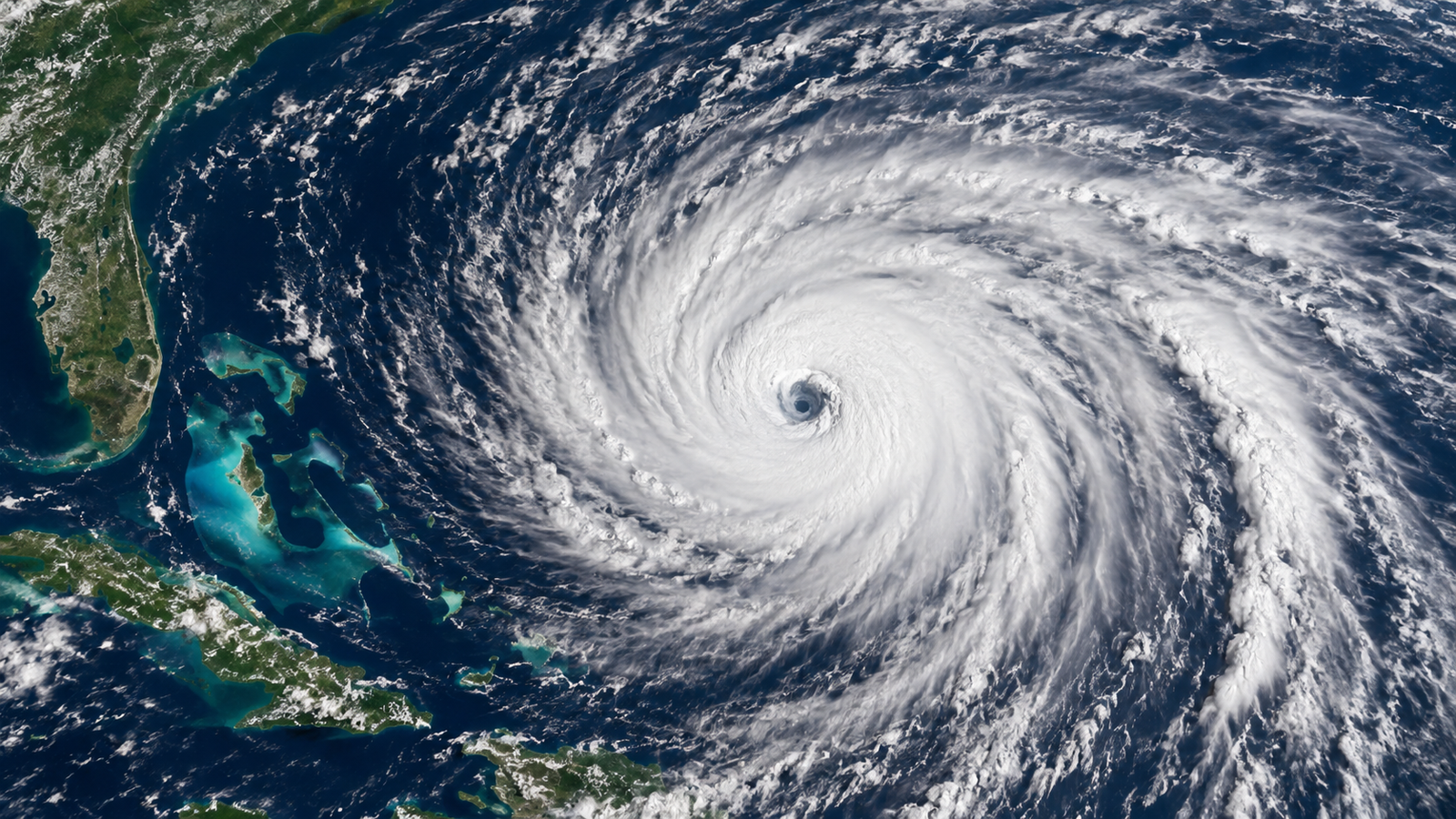
Today’s weather summary covers a North Carolina family reburying relatives whose graves were swept away by Hurricane Helene, worsening floods in Central Florida, new drought declarations in the Indian state of Maharashtra, a powerful atmospheric river in Southern California and forecasts of stormy weather ahead of Thanksgiving travel in the United States.
North Carolina family reburies relatives swept away when Helene destroyed a cemetery
More than two years after Hurricane Helene tore through a cemetery in Yancey County, North Carolina, a family has returned two relatives to their original graves. Terry Miller said the remains of his grandmother and his aunt were carried miles away by floodwaters and were later found in Tennessee, his grandmother in Erwin and his aunt in Jonesborough just over a week ago. He said his mother, Glessie, whose grave was also washed out, has still not been found.
Miller said the storm left every headstone in Whitson Cemetery lying flat and covered the site in debris, and that rebuilding a small part of it to its original size took 39 dump truckloads of material. He gave a DNA sample to help with identification and said a forensic team from East Tennessee State University played a significant role. He said he hopes to rebury his mother in the same grave if any of her remains are recovered.
Helene struck the south-eastern United States in late September 2024 after making landfall in the Big Bend region of Florida as a Category 4 hurricane. It caused at least 253 deaths and became the deadliest storm to hit the US mainland since Hurricane Katrina in 2005. Catastrophic flooding and more than 2,000 landslides hit the southern Appalachians, and at least 106 people died in North Carolina, far more than in any other state.
Flooding spreads across Central Florida as Brevard County opens emergency shelters
Days of heavy rain that had already closed schools in South Florida continued to flood roads and threaten homes across Central Florida on Thursday, mainly east of Orlando near the Atlantic coast. Orange County said its public works crews were in the field maintaining drains, canals and other infrastructure, while the National Weather Service extended a flash flood warning to the south-east of the county. Union Park had recorded 9.94 inches of rain by Thursday night.
In neighbouring Brevard County, emergency shelters opened for residents who had left flooded homes, including a county shelter in Cocoa and a Red Cross shelter in Melbourne, while a church opened another in Titusville. Guests were asked to bring bedding, medicines and spare clothing. A section of State Road 520 was shut after water covered it from the median to the shoulder. Forecasters expect drier weather from Saturday, with only a 10% chance of rain on Sunday.
Florida has a defined rainy season from May to October, when brief but heavy thunderstorms build in the afternoon heat, and the dry season usually sets in during October and lasts until late April. Fronts from storms further north occasionally bring light winter rain to the north and centre of the state. The current downpours follow severe flooding in Brevard County two weeks ago, and residents have been urged to use sandbags and to check their flood insurance.
Maharashtra adds two talukas to its drought list, bringing the total to 310
The government of the Indian state of Maharashtra has declared two more talukas drought-hit, raising the number of affected administrative areas to 310 of its 358, Revenue Minister Chandrashekhar Bawankule said on Thursday. Hatkanangale and Gadhinglaj in Kolhapur district were added after talks with Chief Minister Devendra Fadnavis, and a survey has been ordered for 13 more talukas. Bawankule said banks and microfinance companies had been told not to harass farmers in affected areas over loan repayments.
The state has set aside Rs 488 crore to complete pending drinking water schemes, including Rs 400 crore for projects that are three-quarters finished but still rely on water tankers. Bawankule said the government also planned a Rs 5,000-crore programme to revive disused dams, village ponds and other traditional water bodies across the state, and had told municipalities and industries to use treated wastewater rather than drinking water for construction, power plants and gardens.
Drought is a recurring problem in India, where only about 35% of farmland is irrigated and two-thirds of cultivated land depends entirely on rainfall. South-eastern Maharashtra is among the regions most exposed when the monsoon fails, and severe droughts in the country have been linked to El Niño events. Kolhapur district, near the Western Ghats, usually receives abundant rain from June to September and has suffered serious floods in years such as 2019 and 2021.
First atmospheric river of the season brings rescues and flood warnings to Southern California
The first atmospheric river of the season reached Southern California on Thursday, flooding roads, closing a stretch of Highway 1 in Santa Barbara County and prompting evacuation warnings for hillsides scarred by recent wildfires. The National Weather Service said rain fell at rates of more than an inch an hour in places, leading to several flash flood warnings, and drivers in the San Fernando Valley crossed water reaching the tops of their tyres during the morning commute.
Los Angeles firefighters used a helicopter to lift a woman stranded on an island in the swollen Tujunga Wash and rescued a man and his dog from a car stuck in standing water. Residents near the burn scars of the Eaton, Palisades, Sunset, Hurst and other fires were told to prepare to leave because of the risk of mud and debris flows, though some warnings were lifted on Thursday night. Forecasters expect clear skies at the weekend.
Atmospheric rivers are narrow bands of water vapour, typically several thousand kilometres long and only a few hundred wide, that carry moisture from the tropics and can bring intense rain when they reach land. The best-known type affecting California is the Pineapple Express, which draws warm, humid air from near Hawaii. Forecasters say this winter’s historically strong El Niño has warmed ocean waters and raised the odds of a wetter season than normal.
Forecasters warn that storms could disrupt Thanksgiving travel in the United States
Forecasters say a series of storms could bring heavy rain and some snow to large parts of the United States during Thanksgiving week, when the Federal Aviation Administration expects nearly 81.5 million Americans to travel at least 50 miles. A system crossing the central and eastern states from Monday to Wednesday could spread rain from the Mississippi and Ohio valleys towards the Great Lakes and the East Coast, while Pacific storms bring rain and mountain snow to the West.
Several computer models suggest a coastal storm could form early next week and bring rain to the Mid-Atlantic and Northeast from Wednesday into Thanksgiving Day, with strong winds, coastal flooding and beach erosion if it hugs the shore. Its impact depends on a track that remains uncertain, and another storm is possible over the holiday weekend. Washington has had just 0.17 inches of rain over the past month after a long run of mild, sunny weather.
Meteorologists link the stormier pattern to El Niño, the warm phase of a natural cycle in sea surface temperatures in the tropical Pacific that recurs roughly every two to seven years. A strong El Niño reinforces the subtropical jet stream, which carries Pacific moisture towards the southern and eastern United States and tends to bring wetter winters to the South. Its effects usually peak during the northern hemisphere winter and can cause intense storms in some regions and drought in others.