
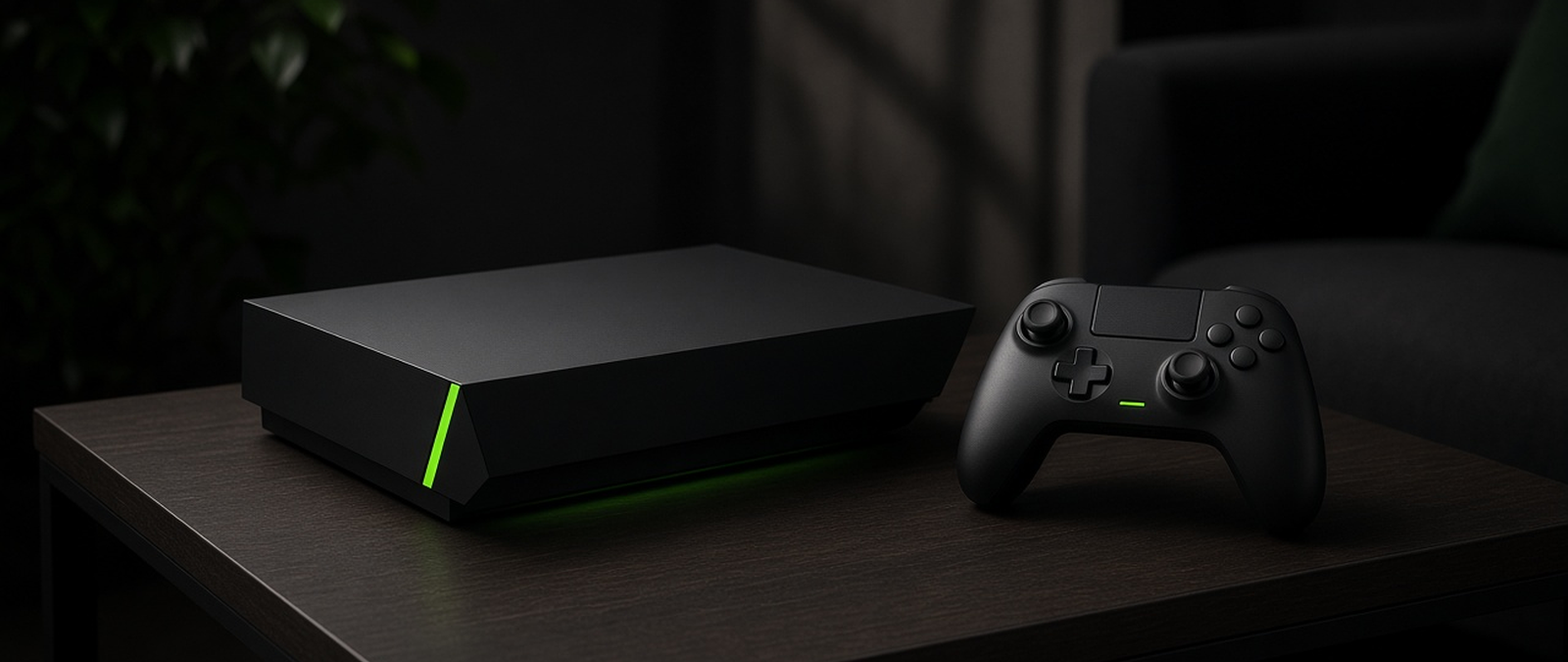
A Microsoft job advert suggests Xbox may keep backing boxed games as PlayStation prepares to drop discs. Sony has patented a new way of generating extra frames, a US congressman wants buyers to own their digital games, Pokémon is booming in its 30th year and an indie studio has scrapped a public demo over fears of AI copies.
Microsoft job advert hints at continued Xbox support for physical games
Microsoft has advertised a full-time post of Xbox Games Supply Strategist, a role focused on physical games, and the listing has fuelled speculation that the company intends to keep selling boxed releases. According to the advert, which users on social media spotted this weekend, the person hired will coordinate the launch of physical Xbox games across all platforms, develop and oversee global supply strategies throughout each product’s life, make sure stock is positioned to meet working capital, cost and service targets, and manage how those games are sold through retail channels. The job sits within the Xbox supply chain team and involves close work with product marketing, finance, manufacturing, engineering and sales. The listing does not mention discs, and Microsoft has said nothing publicly about its long-term plans for physical media, but recruiting someone specifically for this work suggests boxed releases remain part of its business planning.
The advert comes as Sony prepares to stop producing physical discs for new PlayStation games from January 2028, a decision that drew criticism from players and from developers. A games technology specialist said many developers and publishers he spoke to at Gamescom this year were very upset, because physical sales still bring strong returns and, for some, most of their revenue, with smaller studios expected to feel the change most. Microsoft has moved differently so far: a new Disc-to-Digital programme grants digital rights to owners of disc-based games who insert them into a compatible Xbox One or Xbox Series X console. Commentators note, however, that consoles are now the only mass-market use for Blu-ray drives, so a PlayStation exit could make disc supply chains unviable at scale, and some drive makers are already switching production to other products. It is not yet known whether Microsoft’s next console, known as Xbox Helix, will include a drive.
Microsoft’s current machines, the Xbox Series X and Xbox Series S, went on sale worldwide on November 10, 2020, and in China in June 2021, at launch prices of $499.99 and $299.99. The Series X reads Ultra HD Blu-ray, Blu-ray, DVD and CD discs as well as digital downloads, while the cheaper Series S relies entirely on digital distribution, and an all-digital version of the Series X has since been added. Both are built around a custom eight-core AMD processor and AMD graphics, with the Series X capable of about 12 teraflops. Sales of the two models had reached about 35 million units by late February 2026. Sony, by comparison, had sold about 95 million PlayStation 5 consoles by the end of June 2026, which gives its choices on physical media far greater weight in the market for disc drives and boxed games.
Sony patent describes frame generation that uses controller input to cut lag
Sony has filed a patent application for a frame generation system that could be used in future consoles, widely assumed to be the PlayStation 6, although the company has not confirmed any such plan. The document, titled Generation Super Sampling and published under the number US-20260320740-A1, follows the familiar principle of these technologies, in which a model studies a frame that has already been rendered and creates an additional image from it. Systems already on the market rely on motion vectors supplied by the game engine to do this. Sony proposes to add information about what the player is doing with the controller, so that the system can predict more accurately how the player will move in the frames that follow. According to the patent, the aim is to reduce input lag, or at least to give the player the sense that delay has been kept to a minimum.
The filing also allows for more than one frame to be generated at a time, stating that in some versions the prediction is not limited to the next image and that the system can be trained to predict any number of frames before or after the one it receives. Observers have raised doubts about the need for the feature on consoles. Current machines support a maximum refresh rate of 120 hertz, so pushing frame rates above 120 per second could introduce visual errors rather than smoother play. There is also concern that frame generation might encourage developers to rely on artificial frames to hide poorly optimised games instead of improving their performance properly. The PlayStation 5 already uses AMD hardware, and AMD continues to develop its own frame generation in its FSR technology. Some commentators argue that if Sony adopts the system, players should be able to switch it off.
Upscaling and frame generation have become a common part of games technology. Nvidia offers DLSS, AMD develops FSR and Intel uses XeSS, and image upscaling has been available in computer games for more than five years, with frame generation arriving about three years ago. On consoles, Xbox machines have supported FSR since 2022, and Sony introduced its own upscaler, called PSSR, for the PlayStation 5 Pro two years ago. An interview with Mark Cerny, the lead architect of the PlayStation 5 and PlayStation 5 Pro, supported the view that frame generation would be the next step for Sony’s console technology after its upscaler. The PlayStation 5 was released on November 12, 2020, in North America, Japan, Australia and South Korea and a week later in most other markets, at launch prices of $499 for the standard model and $399 for the digital edition, with the more powerful Pro later sold at $699. Sony had sold about 95 million units by June 30, 2026.
US congressman proposes law guaranteeing buyers own the digital games they purchase
Ritchie Torres, a Democratic member of the US House of Representatives from New York, has unveiled a bill called the Power to the Players Act that would require that buying a video game means owning it rather than renting access to it. Torres announced the proposal on October 15. Under its terms, the Federal Trade Commission would protect three consumer rights: to own a game once bought, to keep playing it and to transfer it to someone else. Games with online features would have to include or add an offline mode before their servers are switched off, buyers would be able to resell or share digital purchases much as they trade in discs, and the commission would be able to penalise misleading digital sales practices. Accounts differ on the bill’s status: some describe it as introduced, while others report that it had not yet been formally filed and had no bill number, committee or published text.
Torres said that when people pay for a game they should own it, and that a game which can be removed the moment a company pulls the plug is a rental presented as a sale. He argued that the issue weighs most on working families, saying households in the Bronx and elsewhere save up to buy games and deserve more than a licence that can vanish at any time. The proposal arrives as most digital stores sell games under terms that grant a revocable licence rather than ownership, and as the industry moves away from physical media. Sony has announced it will stop making discs for new PlayStation games from January 2028, noting that about 80 per cent of PlayStation 5 games are already bought digitally, and it plans to close the PlayStation 3 and Vita stores by mid-2027. The boxed edition of Grand Theft Auto VI is due to contain a download code instead of a disc.
The bill echoes the demands of Stop Killing Games, a consumer movement founded in April 2024 by Ross Scott after Ubisoft shut down The Crew, a 2014 racing game that needed a constant internet connection even though it was mainly played alone. The movement presses publishers to keep games playable in reasonable condition after support ends, challenging the practice of selling games as licences that can be withdrawn. Its European Citizens’ Initiative, known as Stop Destroying Videogames, gathered around 1.3 million valid signatures, enough to require a formal response from the European Commission. A petition to the UK Parliament led to a debate, but it was ultimately decided that existing law would not be amended. In California, a law signed in 2024 and in force since the start of 2025 requires digital stores to state clearly when a purchase is a licence rather than outright ownership, though it does not require offline modes.
Pokémon enjoys new boom in its 30th year as Belfast fans fill trading events
The Pokémon franchise is going through a fresh surge of popularity as it marks its 30th anniversary, with adults who grew up with it returning to collecting and younger fans joining them, according to collectors, traders and players in Northern Ireland. Industry figures show Pokémon was the world’s biggest toy property in 2025 and the fastest growing in Europe. In Belfast, three friends who once met in coffee shops to swap cards, Daniel Phillips, Joey Gibson and Stephen Mitchell, now run a shop devoted to the franchise. Phillips said the business had seen a massive boom. Their trading event at the city’s Waterfront Hall drew about 600 people the first time and 1,700 by its third edition, and the next one, in November, is expected to attract more than 2,500, with traders coming from across the United Kingdom. Rare cards can fetch thousands of pounds, and one Pikachu card sold for about £16,000.
Phillips said customers come from all walks of life, including solicitors on lunch breaks and police officers after their shifts, and visitors to the shop have included the former world champion boxer Carl Frampton. Mitchell said he once felt too old to collect cards as a father of two approaching 30, until he met others who shared the hobby, and that some customers are now in their seventies and eighties. Matthew Duguid, a content creator from Coleraine, said nostalgia was a major factor because adults who loved Pokémon as children now have their own money to spend, and that social media had played a big part in the revival by reaching younger audiences. He said collecting is often about completing a set rather than money. Mattie Morgan, a competitive player who reached the top eight at the world championships in Japan, said tournaments are now held across the country.
Pokémon started life as two role-playing games, created at the studio Game Freak on the basis of a concept by its founder, Satoshi Tajiri, and released for the Game Boy in Japan on February 27, 1996. The games became unexpected hits and were followed by comics, a trading card game, an animated series and films. Between 1998 and 2000 the franchise spread around the world in a wave of popularity that became known as Pokémania, which had faded by 2002, although Pokémon remained a fixture of popular culture and new products have kept arriving ever since. A second surge followed in 2016 with the release of Pokémon Go, an augmented reality mobile game developed by Niantic, which Morgan credits with drawing many people who had never played before. Pokémon is estimated to be the highest-grossing media franchise in the world, and while its main target audience is children aged five to 12, it attracts fans of all ages.
Indie studio cancels public demo over fears its game could be copied with AI
The developers of Drunken Goddess Reflux, an upcoming independent game, have cancelled a planned public demo, saying they feared its content could be copied quickly with artificial intelligence and released before the game itself reaches the market. The game, made by the studio Alliance Arts, centres on drinking alcohol until a demon vomits up her soul. In a post on social media, the studio said it worried that material from the demo could let others reproduce the look and the play of the game using AI or similar software, and that those imitations could reach the public ahead of its own release. Instead of the public session, the developers will hold closed sessions open only to a limited number of participants. The decision has drawn attention to growing tension between game makers and the spread of AI tools that can produce software quickly.
The studio said AI was not the only reason for the cancellation. It also cited worries about whether it could properly enforce a ban on livestreaming the demo. Even so, its statement named the risk of AI tools being used to copy the game. Reports earlier this year said independent games were being cloned with AI quickly and with little effort, and the Steam store has recently seen a large number of games that used AI during their development. Copies made this way may be of lower quality than games built by hand, but observers note that they can still cut into the original creators’ income and confuse the public about which version came first. The game’s own premise is unusual enough that commentators have joked no AI could have dreamt it up, yet the studio judged that showing it openly before release was too great a risk, and chose to restrict access to a small group of invited players instead of the wider public.
The tools behind these concerns are often grouped under the label vibe coding, a way of developing software in which a person describes a project in everyday language to a large language model, which then writes the code. The practice can involve accepting the generated code without reviewing it closely and steering changes through further prompts. The term was coined in February 2025 by the computer scientist Andrej Karpathy, a co-founder of OpenAI and former head of AI at Tesla, and in March that year Merriam-Webster listed it as a slang and trending expression. It was later named the Collins English Dictionary word of the year for 2025. Supporters say the approach lets amateurs build software without the training normally required, while critics point to weaker accountability and maintainability and a greater risk of security flaws in the resulting programs.