
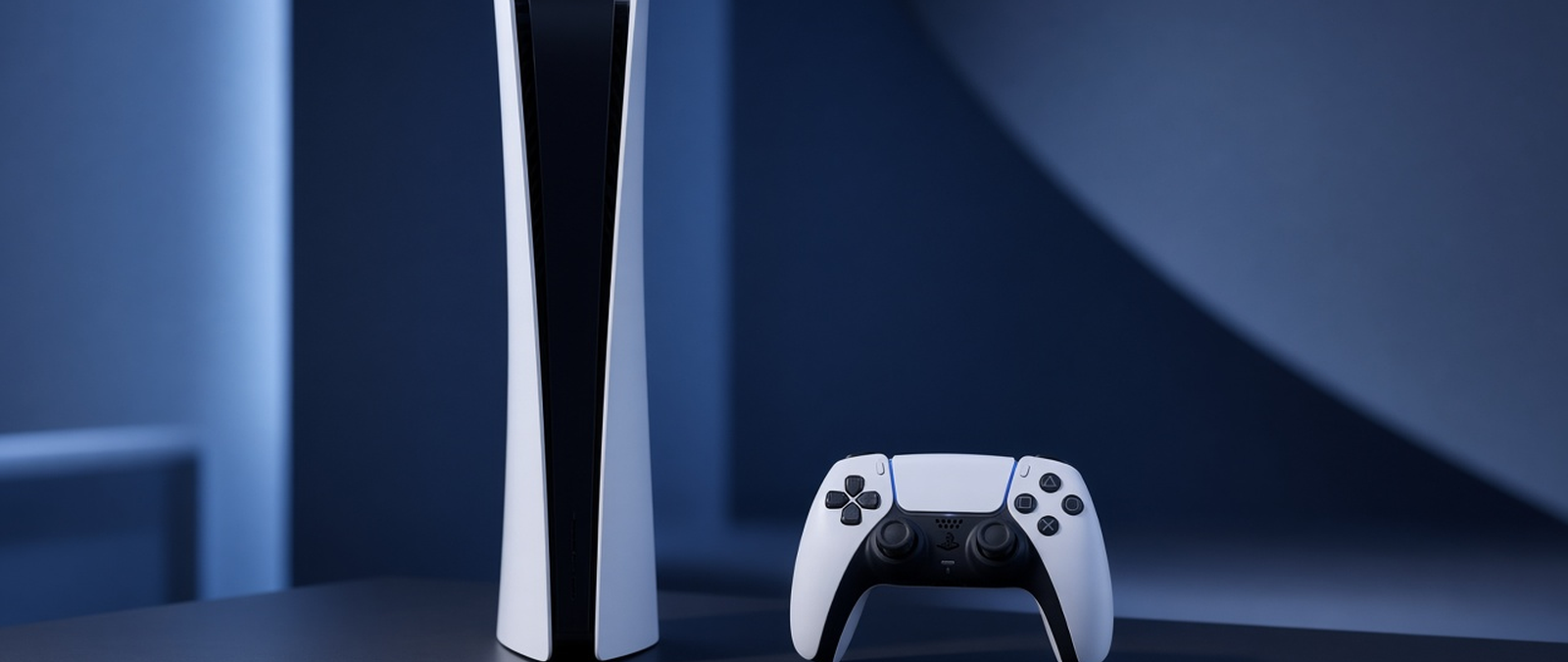
Sony’s PlayStation 5 passes a major sales milestone ahead of GTA 6, a veteran fighting game director mocks the Xbox Series S in front of Microsoft, Nintendo removes mod-chip firmware from GitHub and drops social sign-in, and Resident Evil Requiem leads the winners at the Golden Joystick Awards.
PlayStation 5 passes 100 million units a week before GTA 6 arrives
Sony Interactive Entertainment says the PlayStation 5 has passed 100 million units worldwide since its launch in November 2020, a milestone reached as of November 10. The company thanked players and development partners and said the result reflected its commitment to extraordinary gaming experiences. The announcement came days before Take-Two Interactive releases Grand Theft Auto VI on November 19, the first new main entry in the series since 2013, which Sony says is the most preordered game in its store’s history.
The figures suggest demand picked up sharply in recent weeks. Sony had shipped 93.7 million consoles by March 31, then 1.6 million and 2.6 million in the following two quarters, reaching 97.9 million by September 30. That implies about 2.1 million shipped in the next 41 days, or roughly 51,000 a day. The totals count units sold in to retailers rather than bought by consumers, and they come despite price rises linked to a memory chip shortage.
The PS5 first reached shops in North America, Japan, South Korea, Australia and New Zealand on November 12, 2020, with the rest of the world following a week later, in the middle of the pandemic and a chip shortage that restricted supply. Its predecessor, the PlayStation 4, reached about 116 million units, while the PlayStation 2 remains Sony’s best-selling console at 160 million. A PlayStation 5 Pro model, with a faster graphics processor and improved ray tracing, followed on November 7, 2024.
Katsuhiro Harada tells a Seoul panel he wishes the Xbox Series S had never existed
Katsuhiro Harada, the former Tekken director who now runs SNK VS Studio, told a developer conference in Seoul that he wished hardware like the Xbox Series S had never been released, noting with a laugh that a senior Xbox official was in the audience. Speaking at the Console Game Developers Conference, he asked fellow panellist Paweł Sasko, an associate game director at CD Projekt Red, whether the lower-powered console had quietly frustrated him.
Sasko said the machine’s limits forced his team to write cleaner, better-optimised code, which paid off on every platform, and called its low price its biggest strength. Harada replied that this was a polite way of saying the console was not good enough. He said its memory was a problem, but the harder issue was that it was so close to the Series X while running below it, likening the extra work to caring for a slightly weaker child. Microsoft has not commented.
Harada, born in Osaka in 1970, is best known for his long career at Bandai Namco Entertainment, where he led the Tekken fighting series after joining Namco as a promoter. He studied psychology at Waseda University in Tokyo. He contrasted the Series S with porting games to the Nintendo Switch 2, which he said developers could treat as a distinct device for Nintendo’s audience rather than as a weaker version of another console, and joked about a possible successor called Helix S.
GitHub removes 144 Switch mod-chip repositories after a Nintendo takedown notice
GitHub has taken down 144 repositories hosting firmware and information for Nintendo Switch mod chips, including SX Core, SX Lite, Picofly and HWFLY, after Nintendo sent a fresh copyright takedown notice. In its November 6 notice, Nintendo argues the firmware lets the chips bypass the console’s boot sequence and the technological protection measures that stop it from running pirated copies of games. GitHub decided the notice gave sufficient grounds to remove the material and replaced it with the takedown text.
Nintendo says distributing the firmware amounts to unlawful trafficking in technology designed to get around copy protection, a complaint aimed at the tools rather than at copied games themselves. Mod chips such as Picofly are soldered onto the Switch’s mainboard and flashed with the firmware. Some of the material is still reported to be available elsewhere on the platform. The company also sent notices targeting the Switch emulators Yuzu and Citron Neo, days after emulators began running the new Ocarina of Time remake on PC.
The notices rely on the Digital Millennium Copyright Act, a 1998 US law that makes it a crime to produce or distribute technology intended to circumvent measures controlling access to copyrighted works, and to bypass such controls even without any wider infringement. Nintendo has used the law against GitHub projects before: in 2024 it removed 8,500 copies of Yuzu through a notice aimed at 12 mirrors of the emulator. A guilty plea by Gary Bowser over mod chips did not settle in court whether the devices are illegal.
Nintendo will end Google and Apple sign-in for its accounts in January
From 26 January 2027, Nintendo Accounts can no longer be connected to Google or Apple logins, according to a notice posted on its Australian support site on 10 November. After the cut-off, players will not be able to sign in with either provider or create a new account through them. The company warned that the exact end time could be delayed depending on progress with the system change, and it has not explained the decision or said whether it applies worldwide.
Nintendo said players can keep access by signing in with the email address or sign-in ID and password of their account, or with a passkey, which uses a phone’s fingerprint or face recognition instead of a password. Those who do not know their password can reset it from the login page. The change also affects Switch 2 owners whose purchases and save data are tied to their accounts, and a My Nintendo mission that rewarded linking a Google account will end.
Nintendo Account is the single sign-on system that ties together the company’s mobile apps, the Switch and Switch 2 consoles and services such as the My Nintendo loyalty programme. Registration opened on February 17, 2016, ahead of the launch of the first mobile app, Miitomo, after the late president Satoru Iwata announced a membership scheme developed with the Japanese mobile company DeNA. It was extended to consoles with the March 2017 release of the original Switch.
Resident Evil Requiem wins Ultimate Game of the Year at the Golden Joysticks
Capcom’s Resident Evil Requiem was named Ultimate Game of the Year at the 44th Golden Joystick Awards on November 11, also taking Console Game of the Year and Best Game Trailer, while Crimson Desert won PC Game of the Year. Winners in the 21 categories were chosen by public vote. Grand Theft Auto VI was not in contention because it comes out after voting closed, on November 19, so results could differ at later ceremonies such as The Game Awards.
Capcom was named Studio of the Year, and the multiplayer game Meccha Chameleon collected several prizes, including Best Multiplayer Game and the developers’ and streamers’ choice awards. Dispatch won Best Storytelling and Best Soundtrack, Valheim was Best Indie Game and The Witcher 4 was voted Most Wanted Game. Angela Sant’Albano won Best Lead Performer for Resident Evil Requiem, Grace Saif took the supporting award for Pragmata and Valve’s Steam Controller was named the best hardware.
Launched in 1983, the Golden Joystick Awards are the longest-running public-voted video game awards and among the largest. They were first voted for only by the British public and focused on PC games, before widening to console titles and becoming a global event in which millions of fans now vote online. The ceremony is unrelated to the golden joystick prize once handed to winning contestants on the British television show GamesMaster, although both belong to the same publisher.