
Friday’s economy summary covers a fatal crash involving a Tesla in self-driving mode in California, slower core inflation in Singapore, Rolls-Royce’s talks on state support for a new jet engine, Airbnb’s ban on checkout chores for guests, and Elon Musk’s study of a merger between Tesla and SpaceX.
Tesla running in self-driving mode strikes and kills pedestrian on California motorway
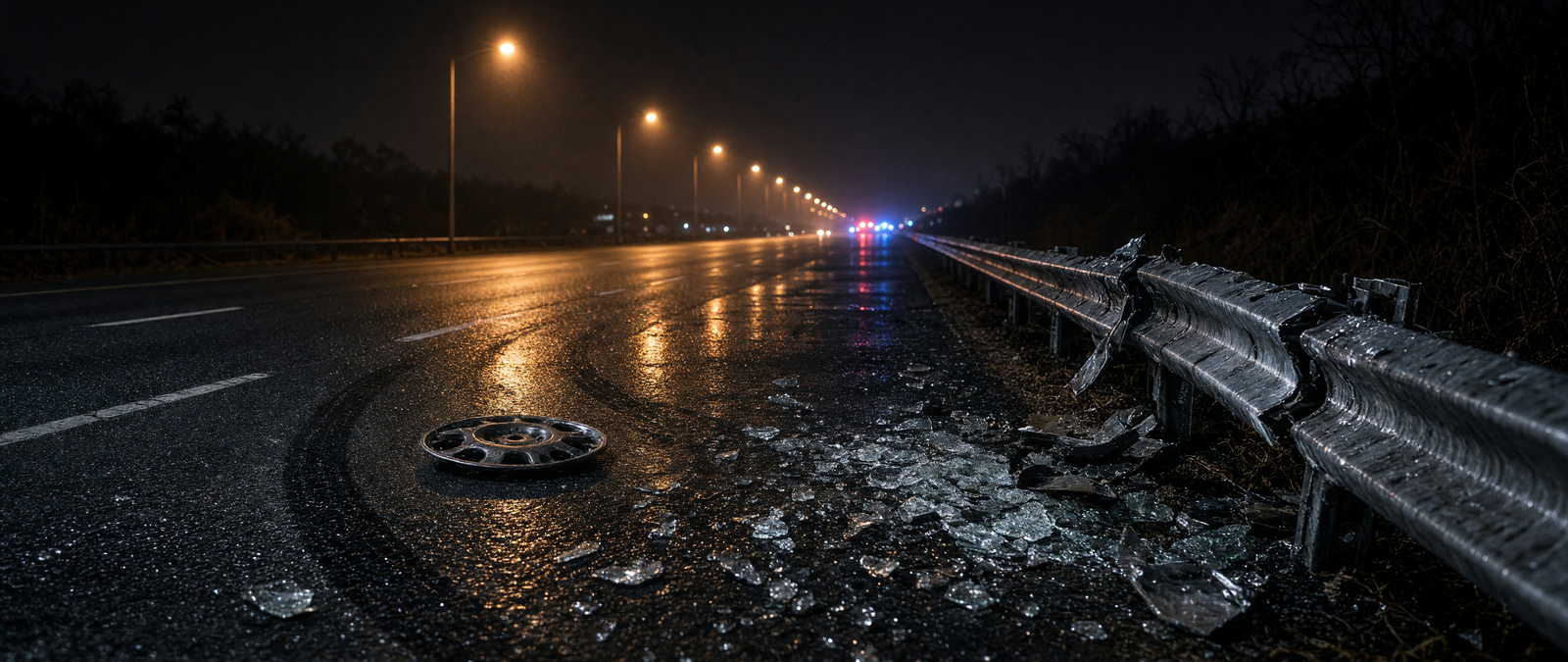
A 71-year-old man from Vallejo died early on Thursday after being hit by a Tesla on Interstate 80 in Solano County, California, at about 2.35am, the California Highway Patrol said. The car’s 26-year-old driver, from San Francisco, told officers it had been operating in its full self-driving mode. He stayed at the scene, cooperated with police and handed over video from the car’s dashboard camera, the patrol said, adding that he had not been cited.
According to the patrol’s first review of the footage, the Tesla was travelling at about 70 miles per hour in the second lane when the man walked on to the road from the right shoulder and crossed towards the central divide. The car braked and steered left but its front right side struck him. Officers believe a second vehicle then hit him as he lay in the road, and that driver did not stop. A crash involving another self-driving Tesla injured two officers on 13 October.
Tesla’s driver assistance software is classed as partial automation, meaning a human must supervise it at all times, and since September it has been sold only as an optional package called Full Self-Driving (Supervised). The system has drawn scrutiny from regulators since a fatal crash in Florida in 2016, and the US road safety agency later counted 60 crashes and one death linked to its trial version over a year to August 2023. In May the agency said recent Model Y cars passed a new benchmark for such systems.
Singapore core inflation slows to 2 per cent in September
Singapore’s core inflation, which leaves out accommodation and private transport, fell to 2 per cent year on year in September from 2.2 per cent in August, official data released on Friday showed. Headline inflation eased to 2.2 per cent from 2.3 per cent. The Monetary Authority of Singapore and the trade ministry said the slowdown came from smaller price rises in services, retail goods and private transport, as furniture prices fell, clothing rose more slowly and car prices climbed at a gentler pace.
Food inflation edged up to 2.4 per cent, while electricity and gas prices stayed 8.7 per cent higher than a year earlier after a tariff increase linked to the jump in global energy prices this spring. The authorities expect imported costs to stay firm in the near term and both measures to remain slightly elevated before easing from mid-2027. They forecast core inflation of 1.5 to 2 per cent this year, and economists said the core rate may be close to its peak.
The Monetary Authority of Singapore, founded in 1971, is the city-state’s central bank and financial regulator, and unlike many central banks it sits within the Prime Minister’s Office rather than operating independently of the government. Since 1981 it has managed monetary policy mainly through the exchange rate of the Singapore dollar, rather than by setting interest rates, with the aim of keeping prices stable. Earlier this month it narrowed its inflation forecasts for 2026 and left that policy unchanged.
Rolls-Royce close to UK funding deal for new short-haul jet engine
Rolls-Royce is close to securing between 100 million and 200 million pounds in British government support to develop and test a demonstrator of its UltraFan 30 engine for short-haul aircraft, people familiar with the talks have said, with an announcement possible as early as next week. The company declined to comment and has not confirmed any agreement. It had hoped to obtain an initial government commitment for the project during the first half of this year.
Chief executive Tufan Erginbilgic said in July that the project could create 40,000 British jobs if the government backed it and the engine won a place on a narrow-body aircraft, and he confirmed talks with other governments, including Germany and the United States. Rolls-Royce has been absent for about 15 years from the narrow-body market, which is far larger than the wide-body segment where it now concentrates. It raised its profit guidance after a 46 per cent rise in first-half operating profit.
The UltraFan is a geared turbofan design with a variable-pitch fan that Rolls-Royce says will be at least 25 per cent more efficient than its earlier engines. Its configuration was fixed in 2018, and the company has since planned two versions, the smaller UltraFan 30 for single-aisle jets and the UltraFan 80 for wide-body aircraft, with engines due to run by 2028 and flight tests before 2030. The British state has backed Rolls-Royce engine programmes before, including with repayable launch investment.
Airbnb bars hosts from making guests do cleaning chores at checkout
Airbnb has told hosts they may no longer require guests to carry out tasks that a cleaner would normally do, such as stripping beds, washing and putting away dishes or taking rubbish off the premises, for all stays booked from 20 November. Hosts can set seven standard house rules and add other reasonable requests, and the company said its new system will flag requests that break the policy. Hosts will also be barred from making guests sign separate contracts, except in limited cases such as legal requirements.
The company said house rules had become confusing and hard to manage, and that it wanted requests to be reasonable and free of surprises. Hosts who break the rules may face warnings, removal of listings or a ban. Some hosts have complained in online forums and called for a strike, while many guests welcomed the change after years of objecting to paying cleaning fees and then being given lists of chores. Airbnb said cleaning fees are meant to cover routine turnover work.
Airbnb began in San Francisco in 2008, when founders Brian Chesky, Joe Gebbia and Nathan Blecharczyk rented out air mattresses during a conference, and it now runs a global marketplace for short and long stays, taking a commission on each booking. Its growth has drawn lobbying from the hotel industry and stricter rules on short-term rentals in many cities. The company has also expanded beyond homes, launching services and a redesigned experiences platform in May 2025.
Musk says Tesla and SpaceX are studying a merger worth about 3.5 trillion dollars
Elon Musk said this week that Tesla and SpaceX have each set up committees of independent board members to study a merger, which he described as a good idea while stressing that nothing has been agreed. With Tesla valued at about 1.5 trillion dollars and SpaceX at about 2 trillion, a combination would be the largest merger on record. Musk said any deal would need the support of more than half of all Tesla shares, a threshold he called a high hurdle.
Musk argues that both companies depend on artificial intelligence, chips and computing power, and they are already building a chip factory in Texas together. SpaceX reported a quarterly profit of 4.4 billion dollars, while Tesla said its net profit fell 43 per cent to 787 million dollars on flat revenue of about 28 billion. Musk holds about 20 per cent of Tesla but controls most of the votes at SpaceX, so a merger could increase his control. Tesla shareholders meet on 3 December.
SpaceX, founded by Musk in 2002 to cut the cost of spaceflight, has become the busiest launch provider in the world and runs the Starlink satellite network. In February it absorbed Musk’s artificial intelligence company xAI, which already owned the social network X, in a deal that valued the rocket maker at 1 trillion dollars. Its stock market listing in June raised about 86 billion dollars, the largest such offering in history, and made Musk the first person worth more than a trillion dollars.