
Monday’s politics summary covers a deadly business jet crash on a Florida road, Australia’s plan to tighten visa rules for British backpackers, hacked emergency alert apps in Ukraine and Russia, a US warning to Moscow about a planned attack on a museum estate and the clearing of a housing protest camp in Lisbon.
Business jet crashes onto a busy Florida road, killing all nine people on board
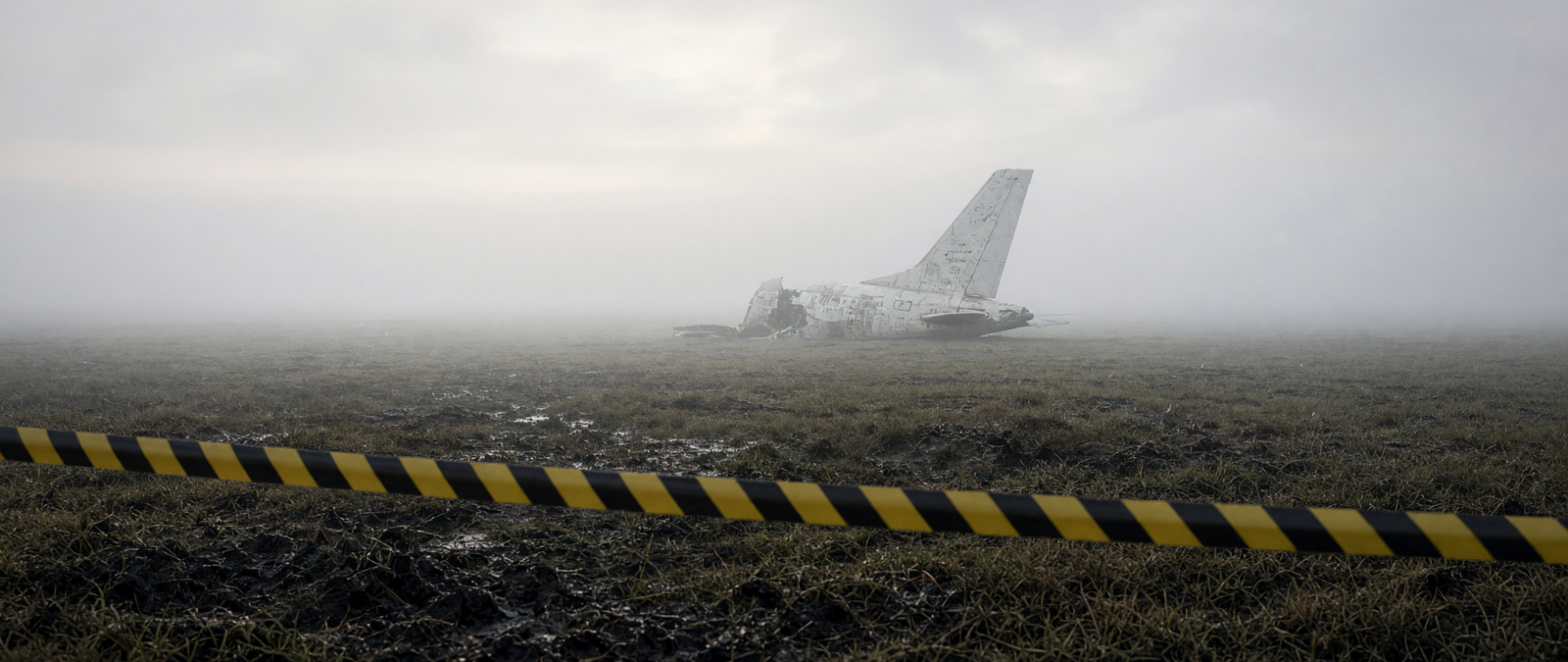
A business jet crashed onto a busy road in Palm Beach County, Florida, on Sunday, killing all nine people on board, US Transportation Secretary Sean Duffy said. The Learjet 60 came down near Cresthaven, about nine miles from President Donald Trump’s Mar-a-Lago resort, at around 12:50 local time, leaving a burning crater on Military Trail, a six-lane road lined with shops and restaurants. Florida Governor Ron DeSantis said no one on the ground had been reported killed or injured.
The Federal Aviation Administration said the aircraft had left Austin, Texas, bound for the Bahamas. In air traffic control audio, a crew member reported moderate turbulence and ice, then declared an emergency, saying the jet was descending at 20,000ft a minute; the last words from the cockpit came about 35 seconds after the mayday. Thunderstorms had been reported in the area. Officials said 600 residents of a nearby trailer park were being evacuated and that the road would stay closed for at least 30 days.
The National Transportation Safety Board is leading the investigation, with a team from the aviation administration sent to help, Duffy said, and it is not yet known who was on board. The Learjet 60 is a mid-size business jet built by Bombardier in Wichita, Kansas, an improved version of the Learjet 55 that first flew in 1990. Production ended in 2007 after 318 aircraft had been built. The model has the highest incident and accident rate in its class, with most accidents happening during landing.
Albanese to seek tighter rules for British backpackers in talks with Burnham
Australian Prime Minister Anthony Albanese will press for tighter visa rules for British travellers when he meets his UK counterpart, Andy Burnham, at the Commonwealth Heads of Government Meeting in Antigua and Barbuda this week. Under the free trade deal between the two countries, Britons on Working Holiday Maker visas can stay for up to three years without the regional work that other holders must do to extend beyond a year. Home Affairs data show UK arrivals climbing to nearly 80,000 in the last financial year, up from about 47,000 in 2024.
Albanese said the backpackers were arriving in very large numbers and working in hospitality around the capital cities, which he said was distorting the labour market. In August he had ruled out any change to the exemption. Home Affairs Minister Tony Burke has proposed a ballot and cap system, with second-year places capped at 45,000 and tied to 88 days of regional work. Opposition leader Angus Taylor called the approach desperate, while the National Farmers’ Federation said worker shortages in agriculture went well beyond the UK deal.
The free trade agreement between Australia and the United Kingdom was signed on 17 December 2021, the first trade deal Britain negotiated entirely anew after leaving the European Union. It widened tariff-free access to the British market for Australian beef and lamb, and in return Britons under 35 became eligible for working holiday visas of three years instead of two. The government is under political pressure to reduce net overseas migration, while the Coalition and One Nation argue that backpacker visas are vital to regional electorates.
Ukraine and Russia report hacks of their emergency alert apps hours apart
Ukraine and Russia both said on Sunday night that their emergency warning apps had been hacked and used to send false alerts. In Ukraine, red-level air raid warnings appeared nationwide from about 22:47 local time, followed in Kyiv by messages warning of radiation, a chemical attack and street fighting, one of them written in Russian and mentioning the Oreshnik missile. The air force said the app had probably suffered hostile interference and that there was no radiation threat, and all-clear messages arrived just over an hour later.
A few hours later, Russia’s emergencies ministry said its own app had been hit by a massive cyber-attack, with a false message claiming nuclear warheads had been launched at every region of the country and urging people to stock up on food for three weeks. The ministry described the app as an ancillary service and said sirens, text messages and broadcasts were working normally. Ukraine’s Centre for Strategic Communications blamed Russia, while Oleksandr Merezhko, who chairs the Ukrainian parliament’s foreign affairs committee, would neither confirm nor deny a Ukrainian role in the second attack.
The false alerts came minutes before the end of a six-day local ceasefire around Oleshky, in the Kherson region, which had allowed hundreds of residents to leave the Russian-occupied town. Oreshnik is a Russian intermediate-range ballistic missile believed to be derived from the RS-26 Rubezh and able to carry several warheads. It was first used in combat on 21 November 2024 against a missile plant in Dnipro, and President Vladimir Putin said on 1 August 2025 that it had entered production and service.
US embassy warns of a credible plot to attack a Moscow museum estate
The US Embassy in Moscow issued an urgent security alert on Saturday, warning of a credible threat of a mass casualty event that day at the Tsaritsyno Museum Reserve in the south of the Russian capital. It told American citizens to avoid the site and large crowds, carry identification and keep their phones charged, and said Washington was coordinating a response with the Russian authorities. Russia’s FSB security service confirmed it had received information from its US partners about plans for a terrorist attack and said it was taking appropriate action.
Police and emergency services cleared the grounds during an afternoon concert, evacuating staff and visitors and closing the site for what were described as technical reasons, with around 50 security officers posted around the former imperial estate. A musician performing at the time said evacuation sirens sounded over the public address system as her set was ending. Neither side named a suspected group or said where the intelligence came from. The warning came days before Russian, Ukrainian and US negotiators were due to resume trilateral talks in Abu Dhabi.
Tsaritsyno was founded in 1775 as a summer residence for Empress Catherine II but was never completed, and for most of its history it stood as a half-abandoned park with ruins until the palace was restored to its original plans in the 2000s. Washington also passed intelligence to Moscow ahead of the gun attack on the Crocus City Hall concert venue in March 2024, carried out by Islamic State militants, which killed at least 145 people. The latest exchange comes as relations between President Donald Trump and President Vladimir Putin have warmed.
Police clear a Lisbon housing protest camp as the government presses on with its rental bill
Riot police with dogs and shields moved on a tent camp in Lisbon’s Rossio Square at around 4:30 on Sunday morning, dispersing hundreds of protesters who had gathered to protect it. More than 50 tents had been set up after a march through the city centre on Saturday that drew thousands of people opposed to a rental bill the minority centre-right government is steering through parliament. Police commander Iuri Rodrigues said he had warned protesters three times that the tents would be removed. A smaller camp in Porto was also dismantled.
The legislation would ease evictions and scrap rent limits on newly signed leases, and it cleared a first reading after the far-right Chega party abstained. Prime Minister Luís Montenegro said on Thursday that he would not scrap it but was open to amendments before a final vote in the coming weeks. Socialist Party leader José Luís Carneiro urged the government to hold talks with opposition parties and protesters, and Socialist lawmaker Pedro Delgado Alves said nothing justified the use of force in a peaceful square.
Portugal faces one of the worst housing crises in Europe, and young people are among those most affected: since 2017 property prices have risen more than twofold, while rents on new contracts have almost doubled. Similar protests over housing costs have spread to Spain, France and Germany. Montenegro, leader of the Social Democratic Party, has headed a minority government since April 2024, and his Democratic Alliance increased its plurality in a snap election after his first government lost a confidence vote in March 2025.