
Riyadh’s main airport has reopened after a week of Houthi strikes, while dozens of carriers keep services to Saudi Arabia on hold. A deadly fire has spread from a Canadian army training base, a container ship has sunk in the Strait of Hormuz, three men have been sentenced in Mexico and Romania has downed two drones over the Black Sea.
Riyadh airport reopens after Houthi strikes as many airlines keep flights suspended
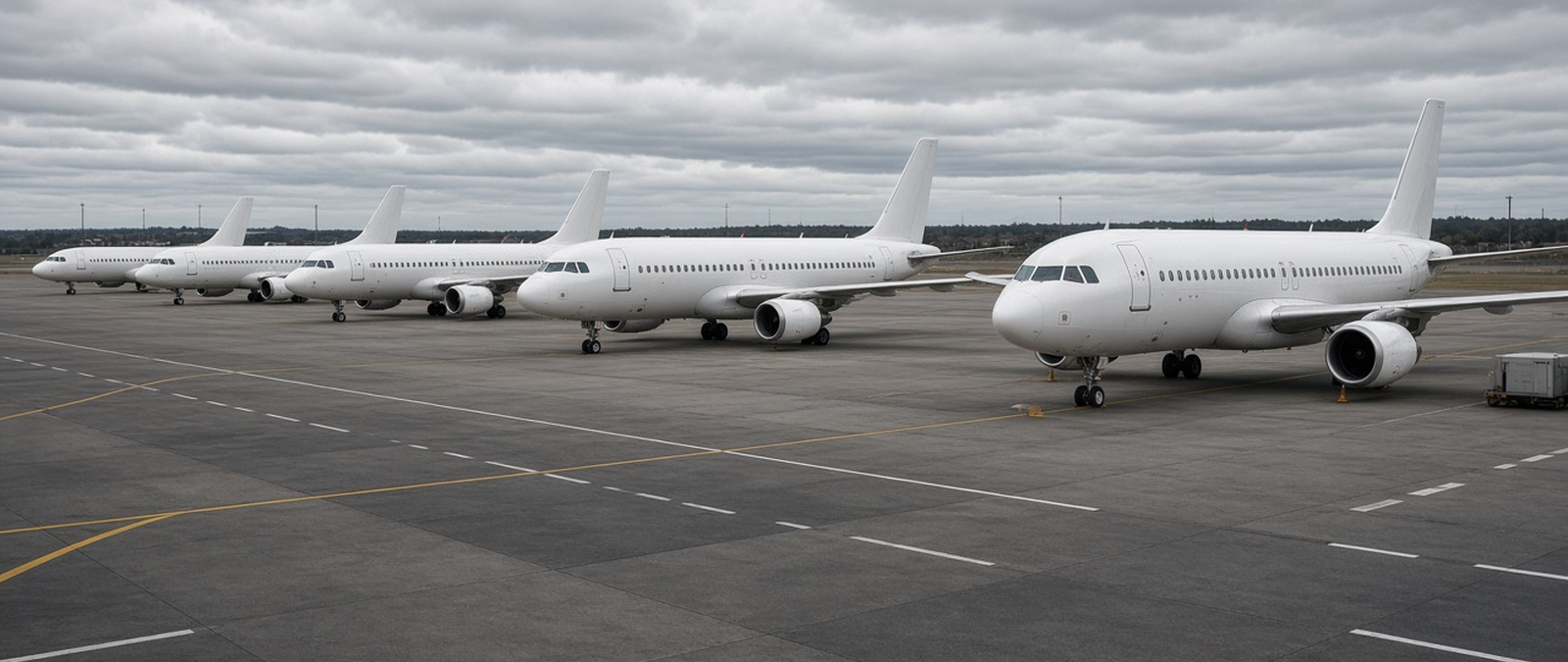
King Khalid International Airport, the main gateway to the Saudi capital, resumed operations on Sunday after being shut by a run of attacks launched from Yemen by the Houthi movement. The reopening has not brought a quick return to normal schedules. A large number of foreign and regional carriers are still holding back services to Riyadh and to other Saudi cities, and several have pushed their suspensions well into November, with a few looking as far ahead as next year. Others say they are getting ready to restart. Etihad Airways has halted flights between Abu Dhabi and Riyadh until Monday, October 19, although its listings show services to Dammam and four flights to Jeddah planned for Sunday. Emirates has made cancellations and timetable changes on its routes from Dubai to Riyadh, Jeddah and Dammam, with six Riyadh services listed for October 20.
Among other Gulf airlines, Flydubai has cancelled flights to Riyadh, Dammam and Abha until October 19, Air Arabia has dropped services from Sharjah to several Saudi cities without naming a restart date, and Qatar Airways has paused flights to Riyadh and Dammam. Oman Air says all Riyadh flights are off until October 22, and the budget carrier SalamAir has cancelled Riyadh and Dammam services until October 31, citing security developments in the region. Further afield, Air France has extended its Riyadh suspension to October 24, Lufthansa to November 18 and Cathay Pacific to January 31, 2027. British Airways plans a limited daily service from November 3. Delta Air Lines has moved the launch of its Atlanta to Riyadh route, which had been due on October 23, to March 2027. Indian, Dutch, Philippine and Singaporean carriers have announced similar cancellations of varying length.
King Khalid International Airport lies about 35 kilometres from central Riyadh and opened on November 16, 1983. It is a hub for the national carrier Saudia, the low-cost airlines Flynas and Flyadeal and the new national airline Riyadh Air, whose creation the Saudi crown prince, Mohammed bin Salman, announced in March 2023. The airport handled about 40.8 million passengers in 2025. Between October 6 and October 12 this year, the Houthis carried out a series of strikes on the airport that killed 18 people and injured more than 300, according to the public record of the attacks. A Saudia Airbus A320 was destroyed during the strikes, which led to the temporary suspension of operations. The Houthis, a Shia Islamist movement based in Yemen, launched the strikes from across the border, and the closure that followed is the reason so many carriers are now reviewing their timetables for the Saudi market.
Deaths and injuries reported after fire spreads from Canadian army base in Alberta
Several people, military personnel among them, have died and others have been hurt after what Canadian officials called a serious incident set off a large fire at Canadian Forces Base Wainwright in the province of Alberta. Defence Minister David McGuinty confirmed on Saturday evening that there had been both deaths and injuries, but he did not give a number and said the situation remained very active and delicate. According to the Royal Canadian Mounted Police, its officers received the first call a little after 4pm local time on Saturday, when a fire was reported in one of the base’s training areas. Strong winds carried the flames across the base perimeter and into the farmland around it. A windstorm with gusts of up to 100 kilometres an hour swept large parts of the province during the day, bringing down trees and scattering signs and bins across streets.
A code orange disaster protocol was activated in Edmonton, about 180 kilometres north-west of the base, as injured people were sent to hospitals across the city. Warren Thirsk, an emergency physician at the Royal Alexandra Hospital, said the volume of patients would overwhelm the city and described the event as the kind of disaster seen once every 15 to 25 years. By 11pm the local municipal district said the fire was being held and that homes and key infrastructure were protected, and no evacuation order was issued. McGuinty said he could not recall a comparable incident in recent memory and that more details would follow. Prime Minister Mark Carney said his thoughts were with those affected, Alberta Premier Danielle Smith called the fire significant and tragic, Saskatchewan pledged help and opposition leader Pierre Poilievre urged residents to keep roads clear for emergency crews.
Canadian Forces Base Wainwright sits next to the town of Wainwright, home to about 7,000 people, on land that was once Buffalo National Park. The park closed in 1940 and the site was leased to the Department of National Defence for an army camp and ammunition storage. Between 1945 and 1946 it held German prisoners of war, and it expanded during the Korean War to train Canadian battalions. Today the base hosts the Canadian Manoeuvre Training Centre, which runs large battlefield exercises, and the 3rd Canadian Division Training Centre, and it ranks among the country’s busiest training grounds. Its support unit has about 690 military staff and 300 civilian workers. The fire also disrupted advance voting in two nearby towns ahead of Monday’s provincial referendum on whether Alberta should start a process that could lead to independence, with Elections Alberta saying ballots from those polling stations were moved securely.
Container ship sinks in Strait of Hormuz as US commanders say most Iranian attacks fail
A Singapore-flagged container ship, the GFS Pride, has sunk after being struck by a projectile while passing through the Strait of Hormuz. The Maritime and Port Authority of Singapore said all 21 crew members were taken off safely and nobody was hurt in the attack, which damaged the vessel and started a fire. United States Central Command said the ship, which is owned in Cyprus, was hit by an Iranian projectile and went down while it was being towed towards shore. A second Singapore-flagged vessel, the GFS Giselle, suffered hull damage the following day but reached a safe anchorage with its 22 crew. Iran’s Revolutionary Guards gave a different account, saying a vessel had struck naval mines and sunk while using what they described as an unauthorised route. Pakistan’s hydrographic office told mariners the wreck lies about four nautical miles north-west of Ras al-Sheikh Masud, off Oman’s Musandam peninsula.
Speaking after the sinking, Central Command spokesman Captain Tim Hawkins of the US Navy said most of Iran’s attempts to hit ships in the strait were failing and that about 97 per cent of vessels seeking to cross had done so without being struck. He called the Guards’ campaign unjustified and said the waterway remained open. Admiral Brad Cooper, who heads Central Command, said on Friday that about 400 merchant ships had crossed the strait in the previous seven days and that US forces had helped Gulf partners move more than 100 million barrels of crude in that period. Hawkins said American forces were escorting commercial traffic while also keeping a blockade on Iranian ports, allowing only humanitarian ships through. He put the number of US service members stationed across the Middle East at more than 50,000. The UK Maritime Trade Operations agency also reported two other container ships struck by projectiles, both with minor damage.
The Strait of Hormuz links the Persian Gulf with the Gulf of Oman, with Iran on its northern shore and Oman’s Musandam peninsula to the south. It is about 167 kilometres long and narrows to roughly 39 kilometres, and it offers the only sea route out of the Gulf for several states, including Kuwait, Iraq, Qatar and Bahrain. Between 2023 and 2025 about a fifth of the world’s liquefied natural gas and a quarter of seaborne oil trade passed through it each year. Shipping in the area has been attacked repeatedly since the war between the United States, Israel and Iran began in February, and the International Maritime Organization has counted at least 24 seafarers killed in 106 confirmed incidents. A preliminary deal to end the fighting and reopen the strait was reached in June but collapsed within weeks, after which Washington reinstated its naval blockade and attacks on shipping resumed.
Mexican judge sentences three men over killing of Australian brothers and American friend
A judge in Mexico has handed prison terms of 158 years and nine months each to three men convicted of murdering the Australian brothers Jake and Callum Robinson and their American friend Carter Rhoad. The court had found the men guilty the previous week. Prosecutors told the trial that the three surfers, all in their early thirties, were killed in 2024 during what appeared to be a failed attempt to steal their pick-up truck at an isolated beach in Baja California, where they had gone on a surfing trip. The court was told the bodies were later found in a well, each with a gunshot wound to the head. For legal reasons, the convicted men were identified only as Jesús Gerardo, Irineo Francisco and Ángel Jesús. Jesús Gerardo, known by the alias El Kekas, was described during the case as the leader of the group.
Debra Robinson, the mother of the two brothers, addressed the court during the proceedings and said the killings had taken away the future the family had pictured with her sons. In a separate trial held last November, the partner of Jesús Gerardo was sentenced to 20 years in prison after admitting she had taken part in the robbery. Mexican authorities said they had found no motive beyond the theft and that the three visitors appeared to have been targeted simply because they happened to be at that spot when the attackers arrived. The case drew wide attention, especially in Australia, because the stretch of coast where the men were camping had been regarded as largely free of the violence that affects other regions of the country. The sentences close the main criminal case against those accused of carrying out the killings.
The killings took place in the municipality of Ensenada, a port city on the Pacific coast of Baja California that the Mexican president Porfirio Díaz founded in May 1882 and that is sometimes called the Cinderella of the Pacific. The city had about 330,650 inhabitants at the 2020 census, and the wider municipality, home to roughly 444,000 people, covers close to 20,000 square kilometres, much of it thinly populated coastline. Ensenada has had a reputation as a welcoming destination for surfers, and the area was generally seen as spared the violence recorded in other parts of Mexico. For that reason the deaths shocked residents and tourists alike, many of whom were troubled by how easily and how pointlessly the three men were killed. The case also showed how common extreme violence remains in the country, even in places that visitors had long considered safe.
Romania shoots down two drones over Black Sea as president seeks stronger NATO presence
Two drones that entered Romanian airspace over the Black Sea were destroyed by the country’s F-16 jets about 20 kilometres south-east of the port of Sulina, the Romanian Defence Ministry said on Saturday. Defence Minister Radu Miruta said the first drone crossed into national airspace at 17:59 local time and was destroyed within two minutes, while the second was brought down at 18:05, five minutes after it entered. Officials have not said where the drones came from. Foreign Minister Oana Toiu said the Black Sea would be made safe again and that the North Atlantic Council, NATO’s main decision-making body, would discuss the matter on Tuesday. The interception followed a week of drone strikes on merchant shipping off Romania and Bulgaria, including an attack on Thursday on two chemical tankers anchored near the Sulina Canal that left seven crew members missing.
Days earlier, President Nicușor Dan said the sea would only become secure once Russia’s war in Ukraine was over and called for closer NATO oversight of the region. Speaking at an EU summit in Brussels, he said drone incursions over Romanian land had begun about 18 months ago and found the country unprepared, and that it now faced a similar gap at sea. He said France had pledged equipment and that he expected continued backing from President Donald Trump. Dan and Bulgarian Prime Minister Rumen Radev met NATO Secretary-General Mark Rutte, and Bulgaria asked for combat aircraft and anti-drone systems. Rutte said the alliance would keep strengthening its eastern flank and its counter-drone capacity. Neither government has formally blamed Moscow, though Radev said logic pointed to Russian interest while admitting it could not be proven, and investigations into the incidents are continuing.
The Sulina branch is one of the three main arms of the Danube delta, running for about 72 kilometres before reaching the Black Sea at the port of Sulina and carrying roughly a fifth of the river’s flow. Jetties first built between 1858 and 1872, and lengthened several times in the following century, now stretch more than nine kilometres out from the shore, and the channel serves as an export route for Ukraine, whose own ports on the coast and the Danube have been hit repeatedly by Russian attacks. Romania, a member of both the European Union and NATO, shares a border of about 614 kilometres with Ukraine, partly along the river. It has reported repeated Russian drone incursions into its airspace since the full-scale invasion of Ukraine began in 2022 and started shooting such drones down earlier this year.